
Editing an AI-Assisted Poem: Check Line Breaks, Rhythm, and Meaning
Compare the original and revised poem one layer at a time so smoother wording does not hide a change in speaker, meaning, or structure.
Read storyLegitWrite Blog
Playbooks, deep-dives, and honest takes from the LegitWrite team — helping writers, students, and creators navigate AI content confidently.
Compare the original and revised poem one layer at a time so smoother wording does not hide a change in speaker, meaning, or structure.
Read storyProtect the parts that make a poem yours, revise one layer at a time, and compare every change against the original.
Read story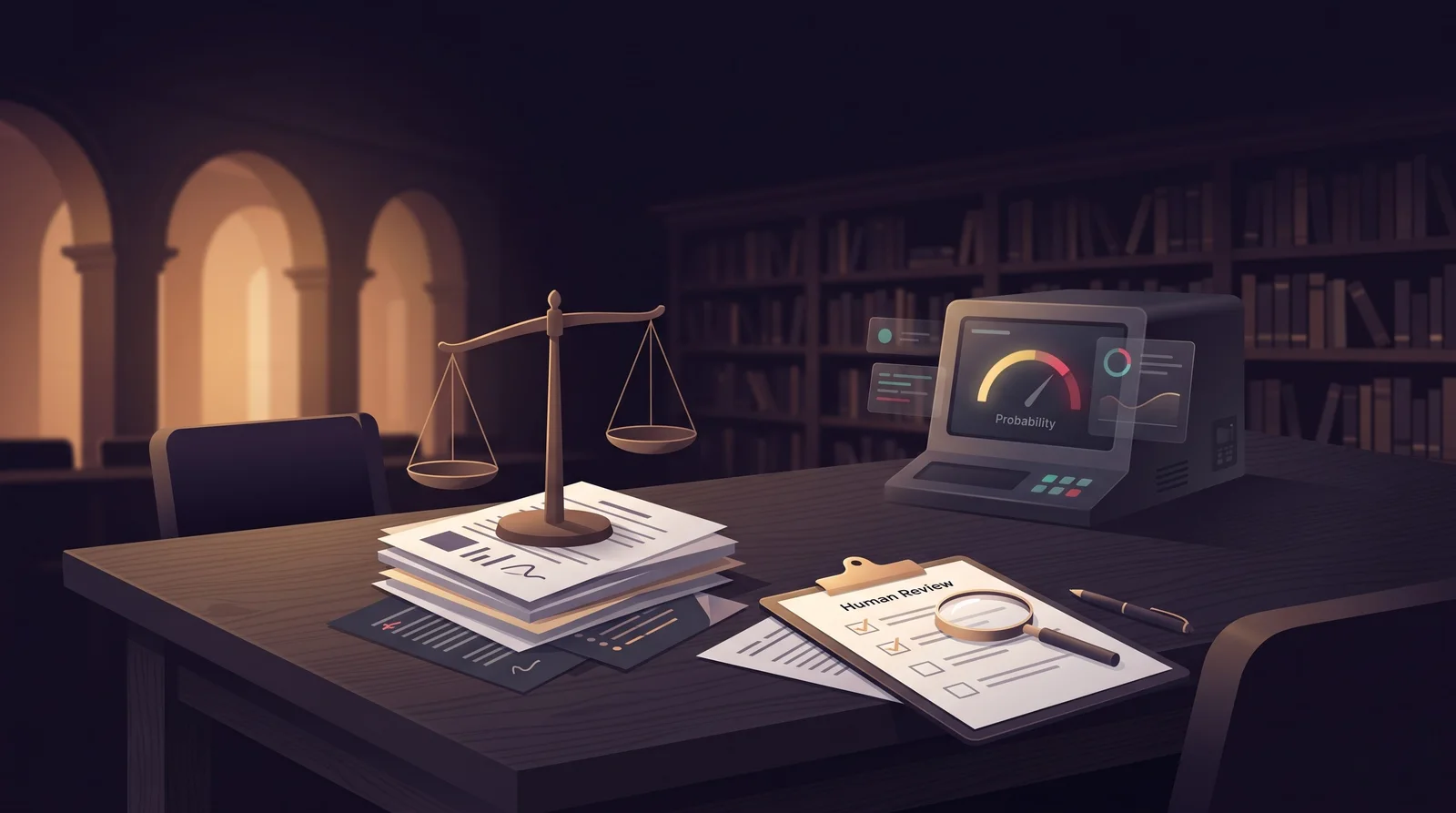
Some universities are moving away from AI detectors because of false positives, multilingual bias, and weak evidence standards. Here is what students should know about Turnitin, GPTZero, and human review.
Read story
Can professors, employers, or anyone else actually tell if you used ChatGPT? Here's what human reviewers notice, what detectors flag, and what actually gives AI writing away.
Read story
Do colleges actually check for AI writing? Here's what Turnitin, SafeAssign, and admissions offices actually see — and what it means for your essays and coursework.
Read story
SafeAssign checks plagiarism, but does it detect AI writing? Here is how SafeAssign differs from Turnitin, what students should know, and when AI text still creates risk.
Read story
How do teachers actually check for AI writing in 2026? From Turnitin to manual review, here's exactly what methods teachers use to detect ChatGPT and other AI tools.
Read story
Most advice on avoiding AI detection doesn't work. Here's exactly what reduces AI detection scores on GPTZero, Turnitin, and Originality.ai — with the techniques ranked by impact.
Read story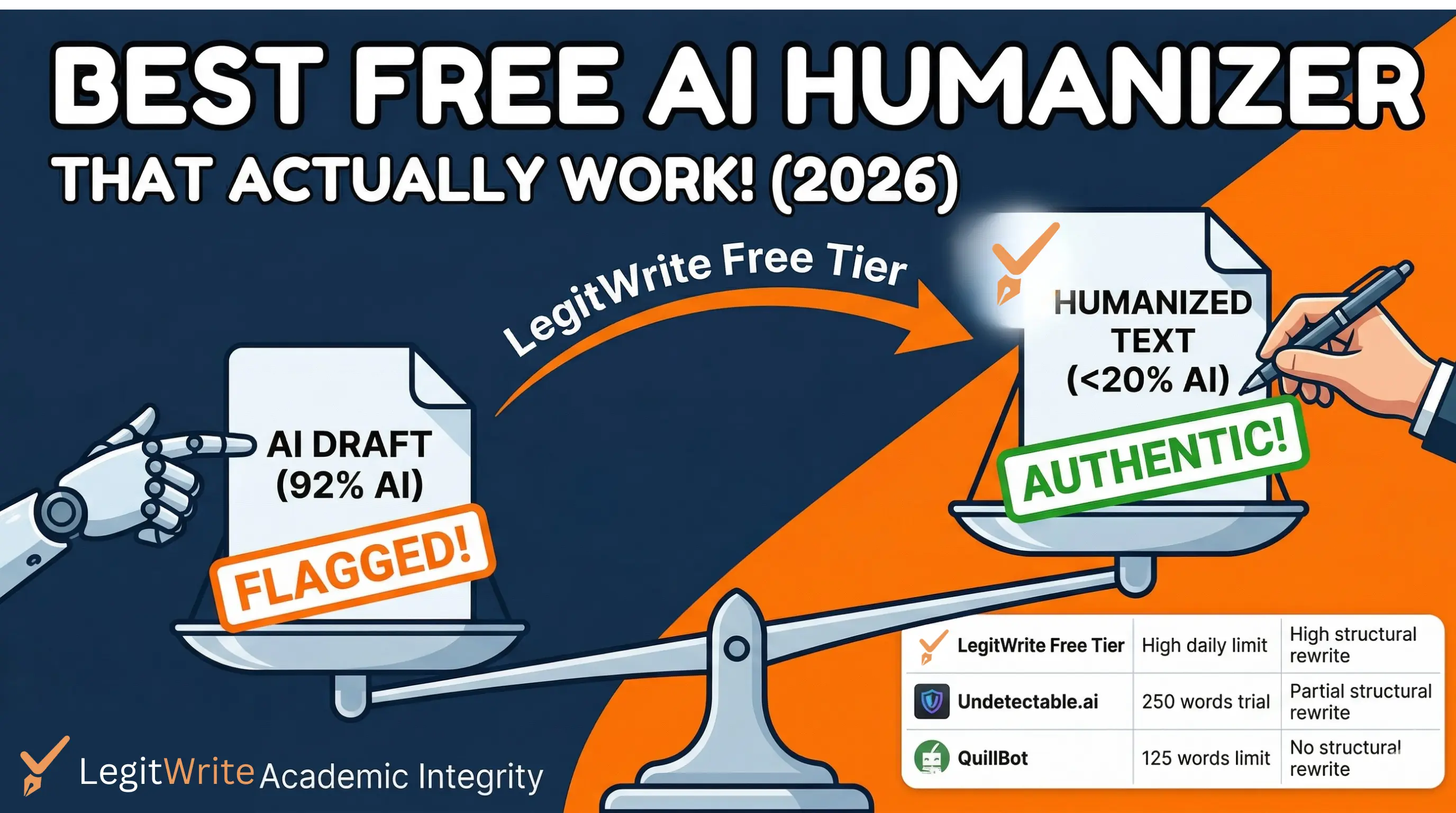
Compare free AI humanizer limits and learn how to review a rewrite. Try LegitWrite on a short passage and check the result against your original.
Read story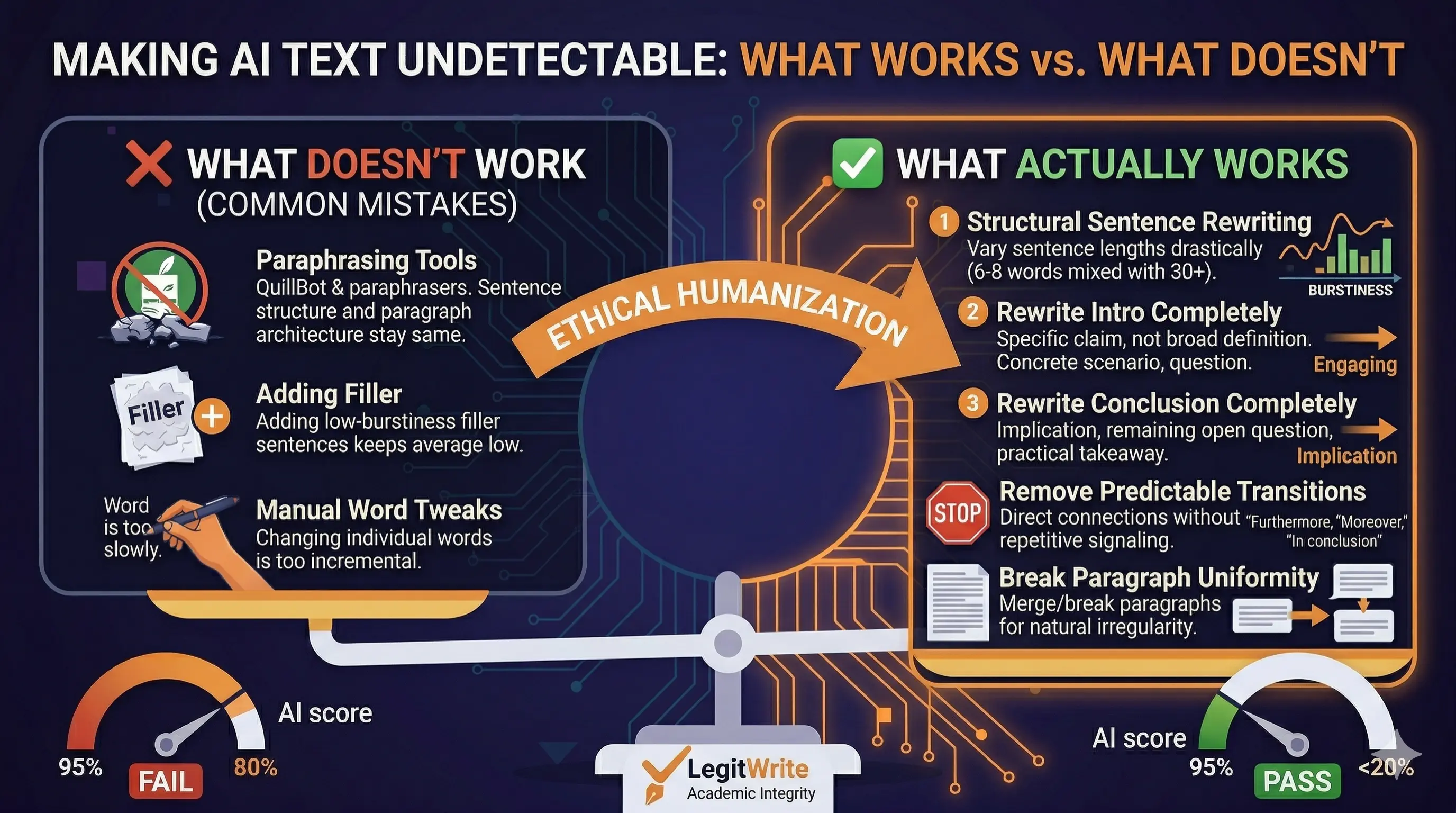
Most approaches don't work. Here's exactly what reduces AI detection scores on GPTZero, Turnitin, and Originality.ai — with expected score drops per technique.
Read story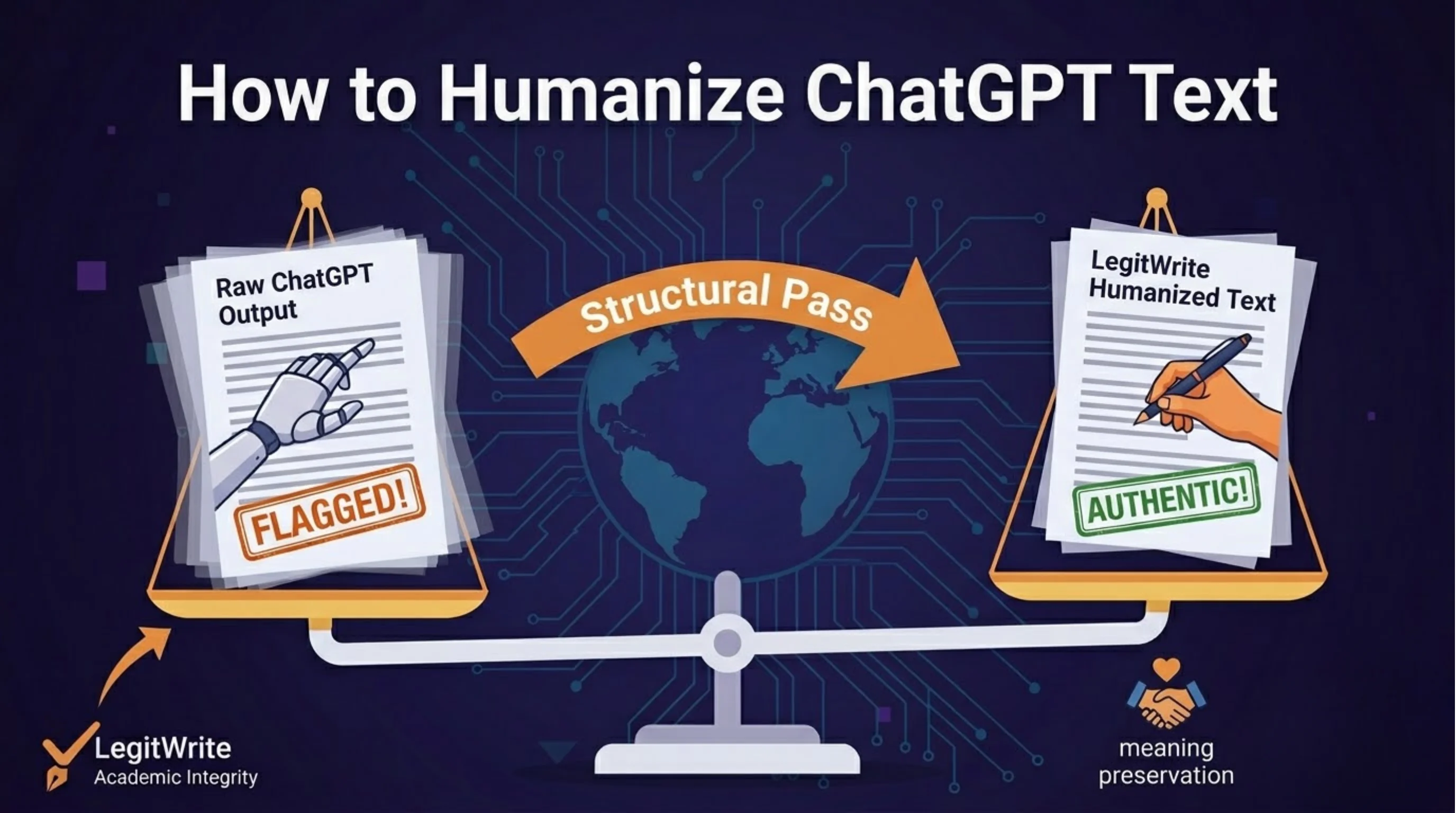
Step-by-step guide to humanizing ChatGPT text in 2026. Learn why AI detectors flag raw ChatGPT output, what structural rewriting actually changes, and how LegitWrite drops GPTZero and Turnitin scores reliably.
Read story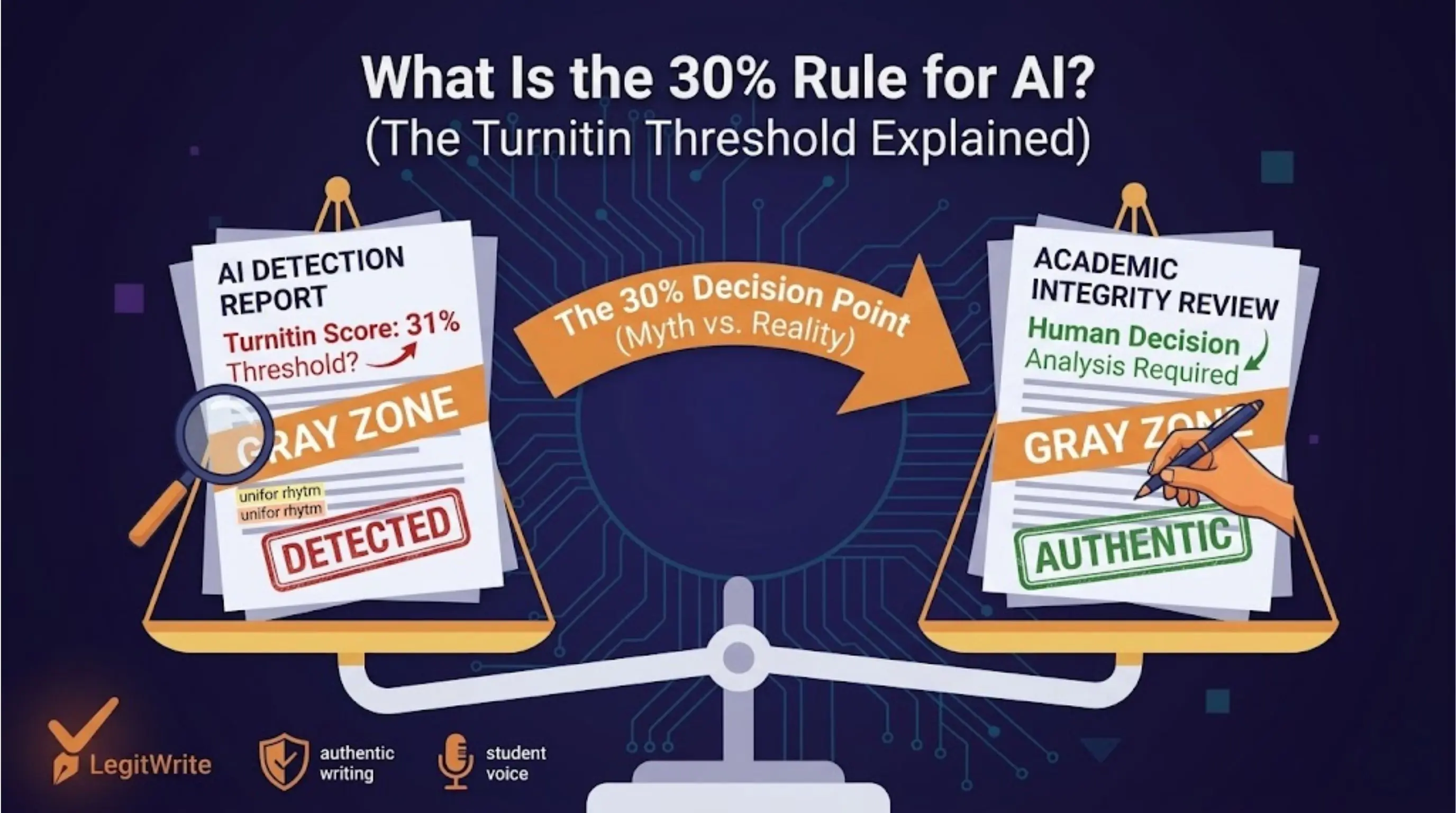
There is no official Turnitin 30% AI rule, but many students worry about that threshold. Learn what a 30% AI score means and what to do next.
Read story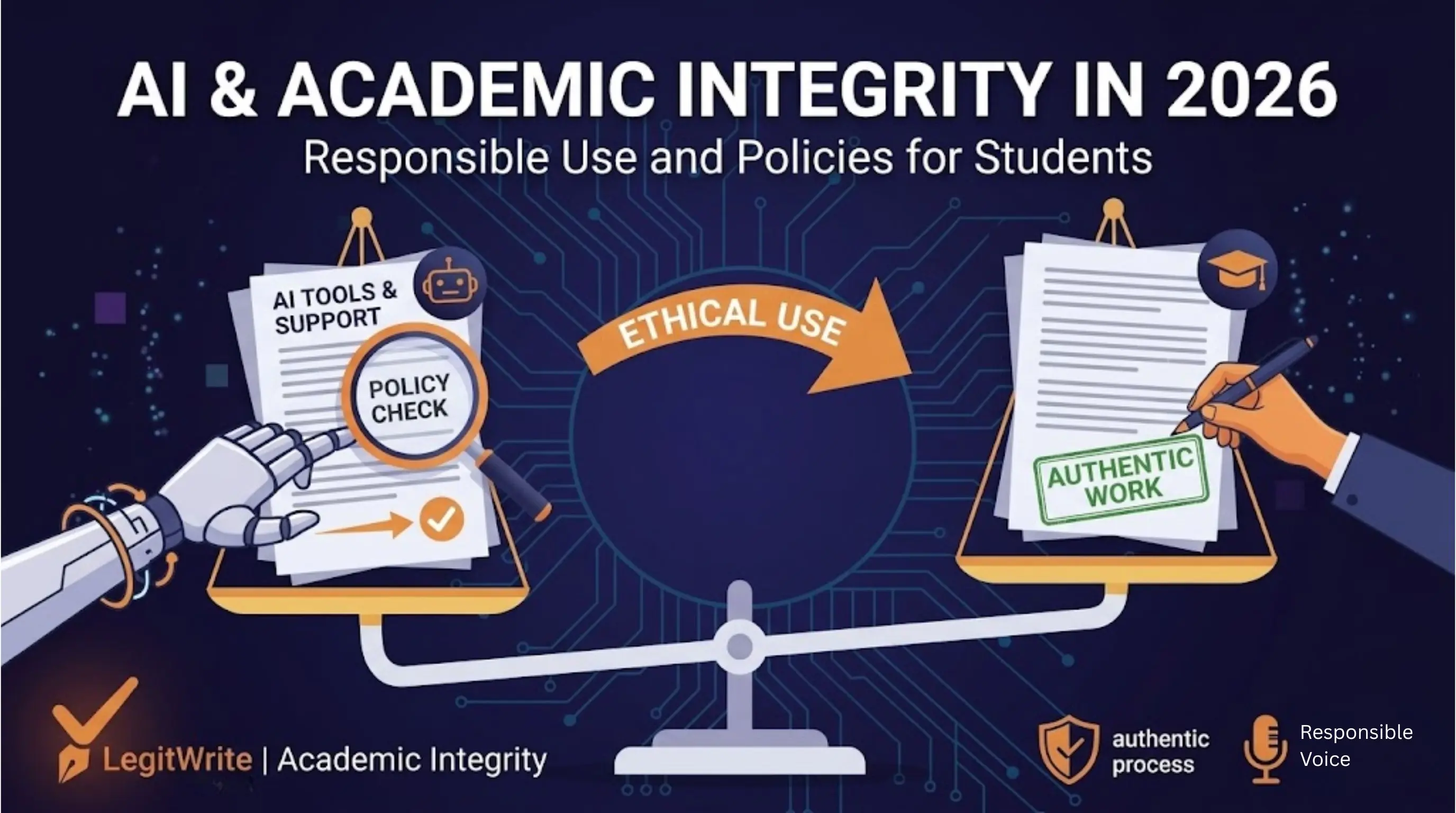
AI writing tools are now part of everyday student workflows, but academic integrity rules have not become simpler. This guide explains what students need to know in 2026 about responsible AI use, disclosure, detection, and revision.
Read story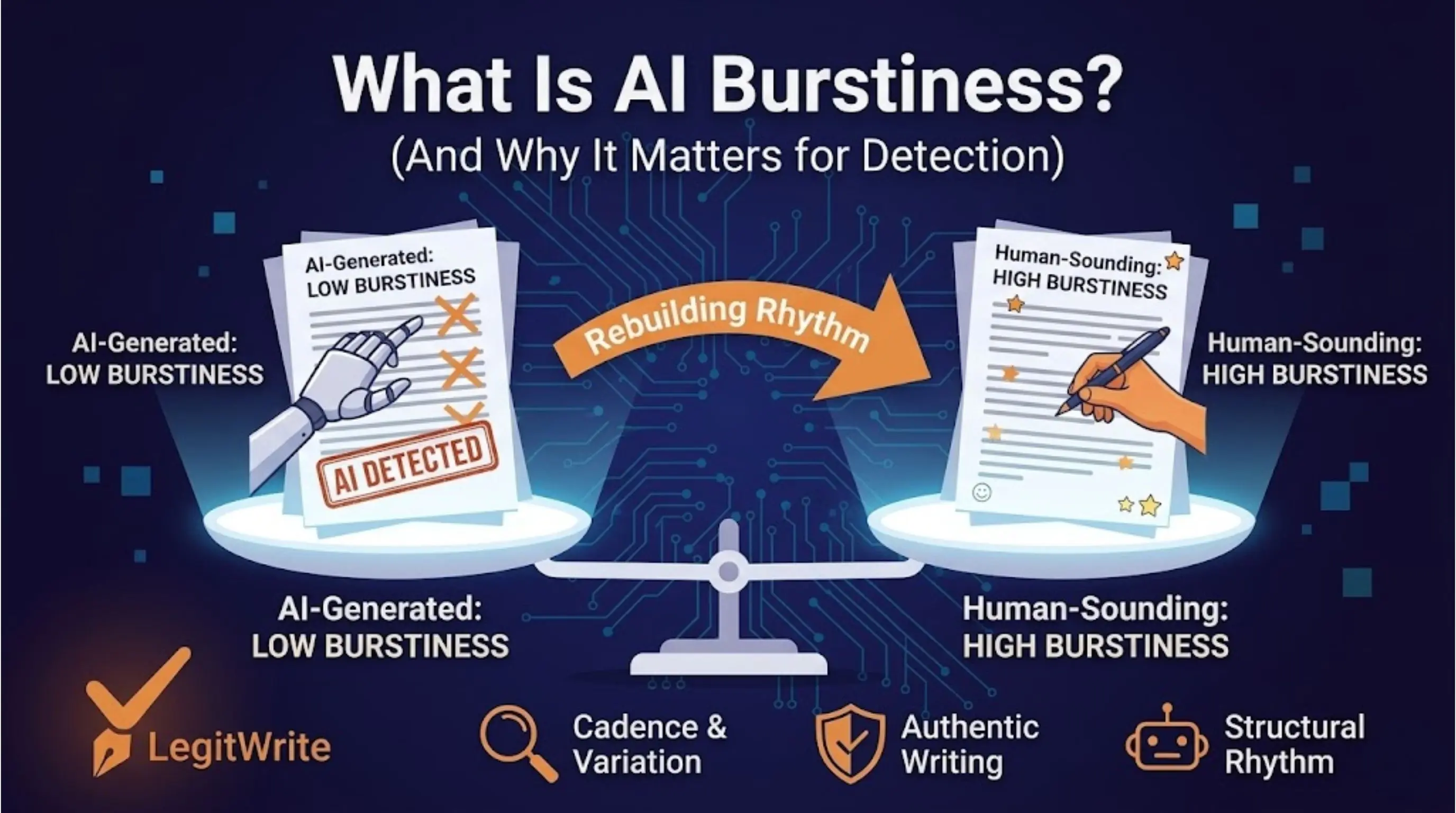
Burstiness is a key AI detection signal. Learn how sentence rhythm, variation, and predictability affect GPTZero, Turnitin, and AI checker scores.
Read story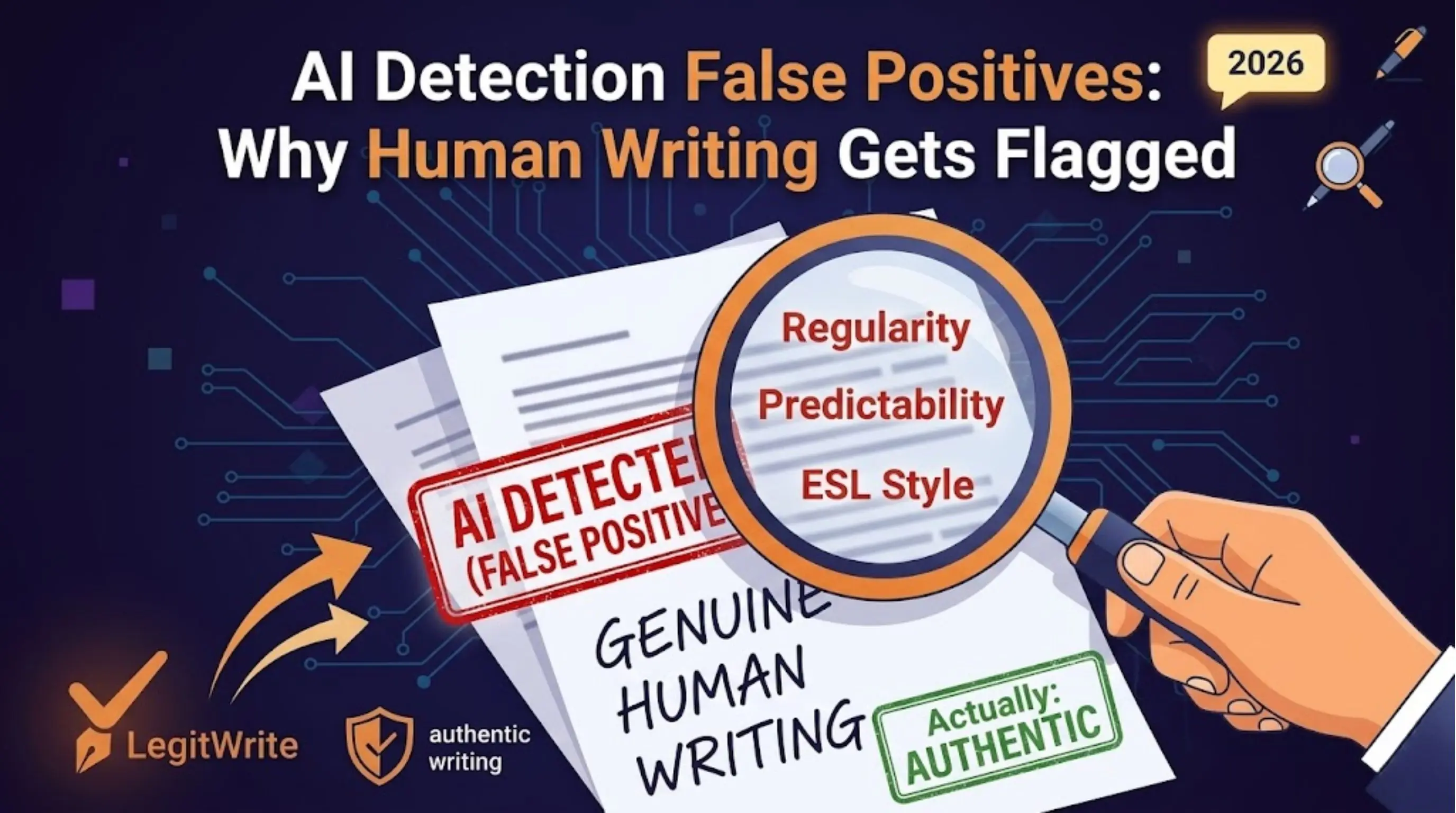
Human-written content gets flagged by AI detectors more often than people think. Here is why false positives happen, who they affect most, and how to respond without panicking.
Read story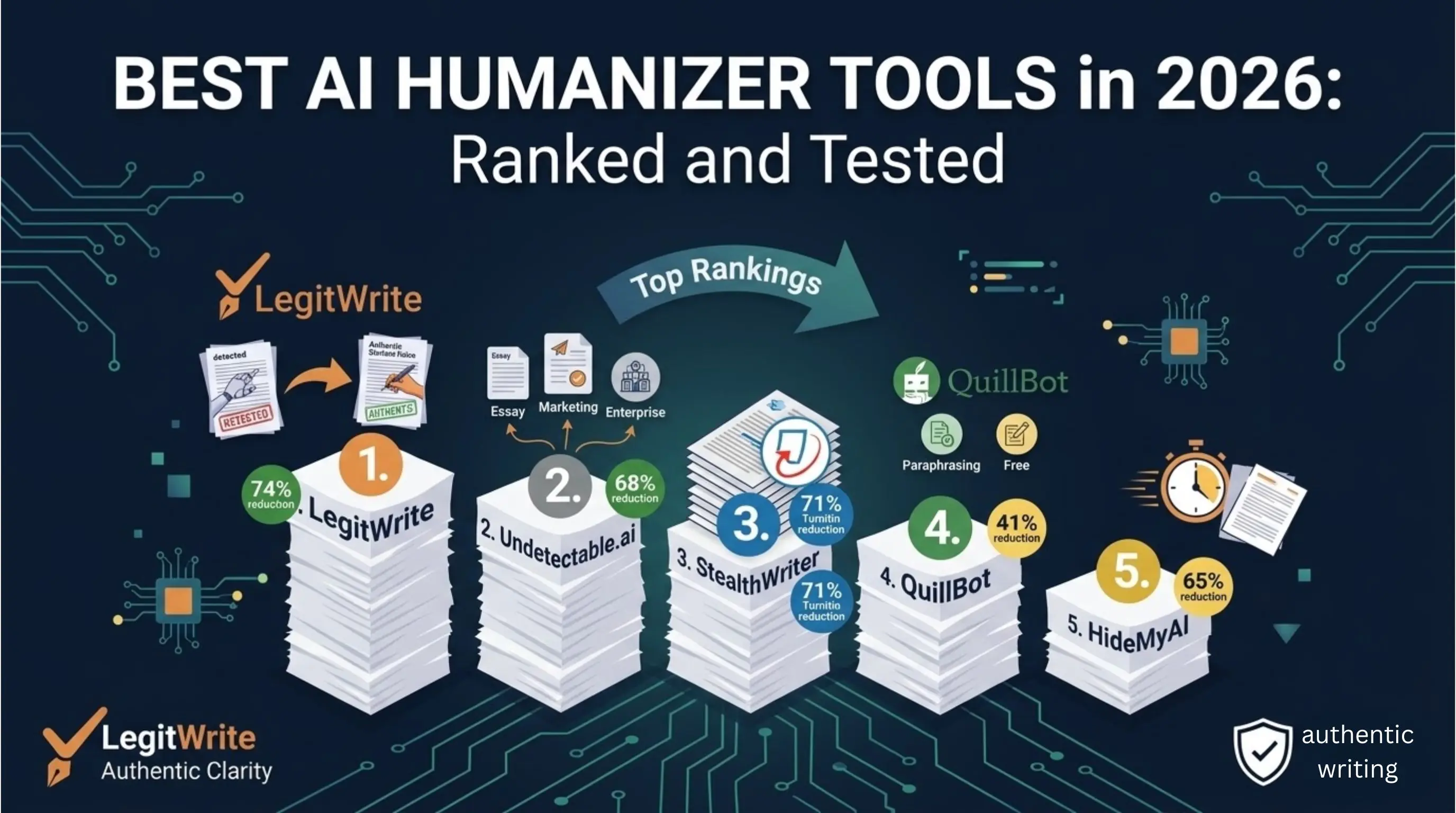
Compare AI humanizer features, trial limits and review options. Learn what to check in a rewrite and how to choose a tool for your writing needs.
Read story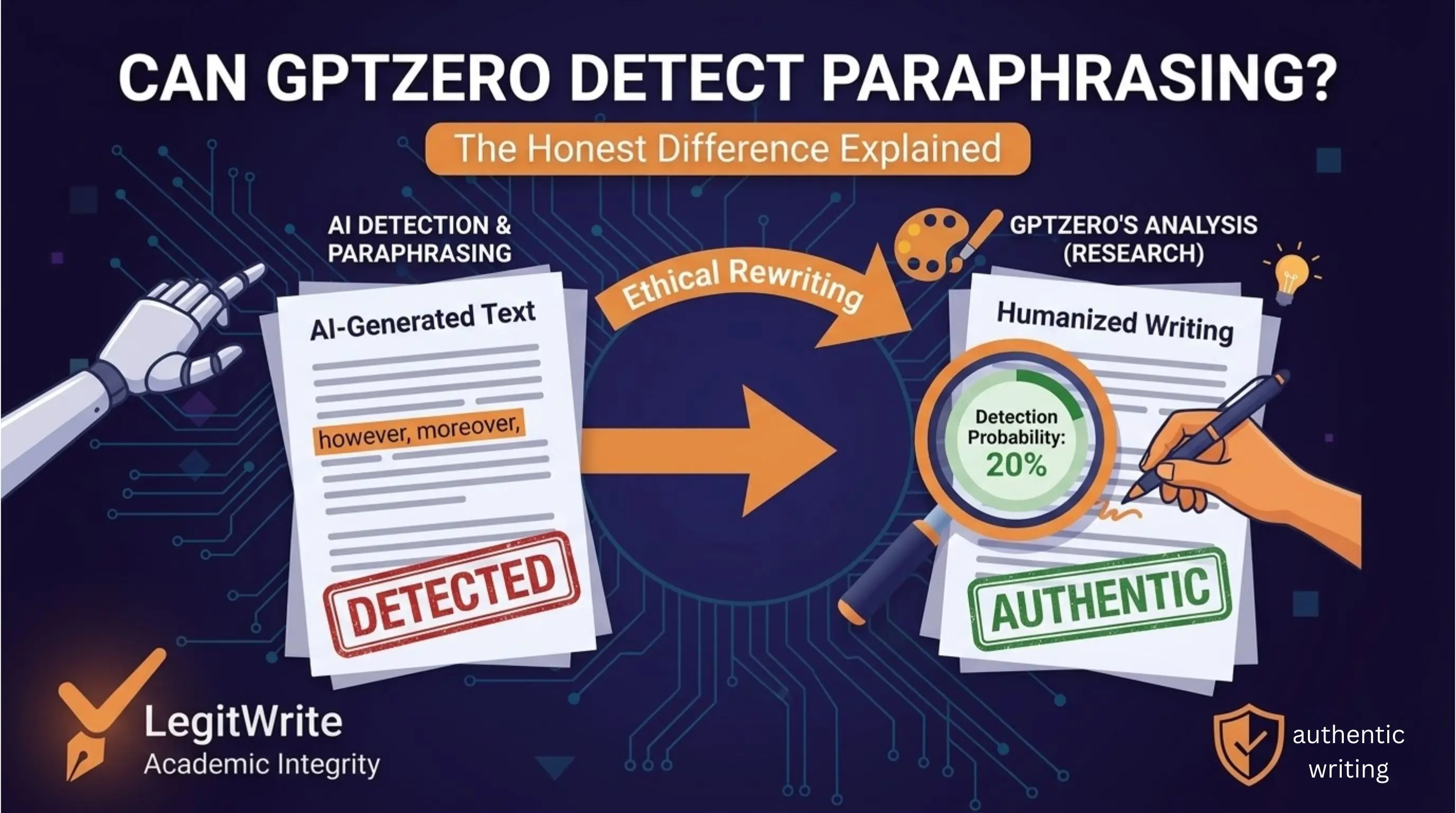
GPTZero can still flag paraphrased AI text when sentence rhythm and structure stay predictable. Learn what paraphrasing changes, what it misses, and how to reduce risk.
Read story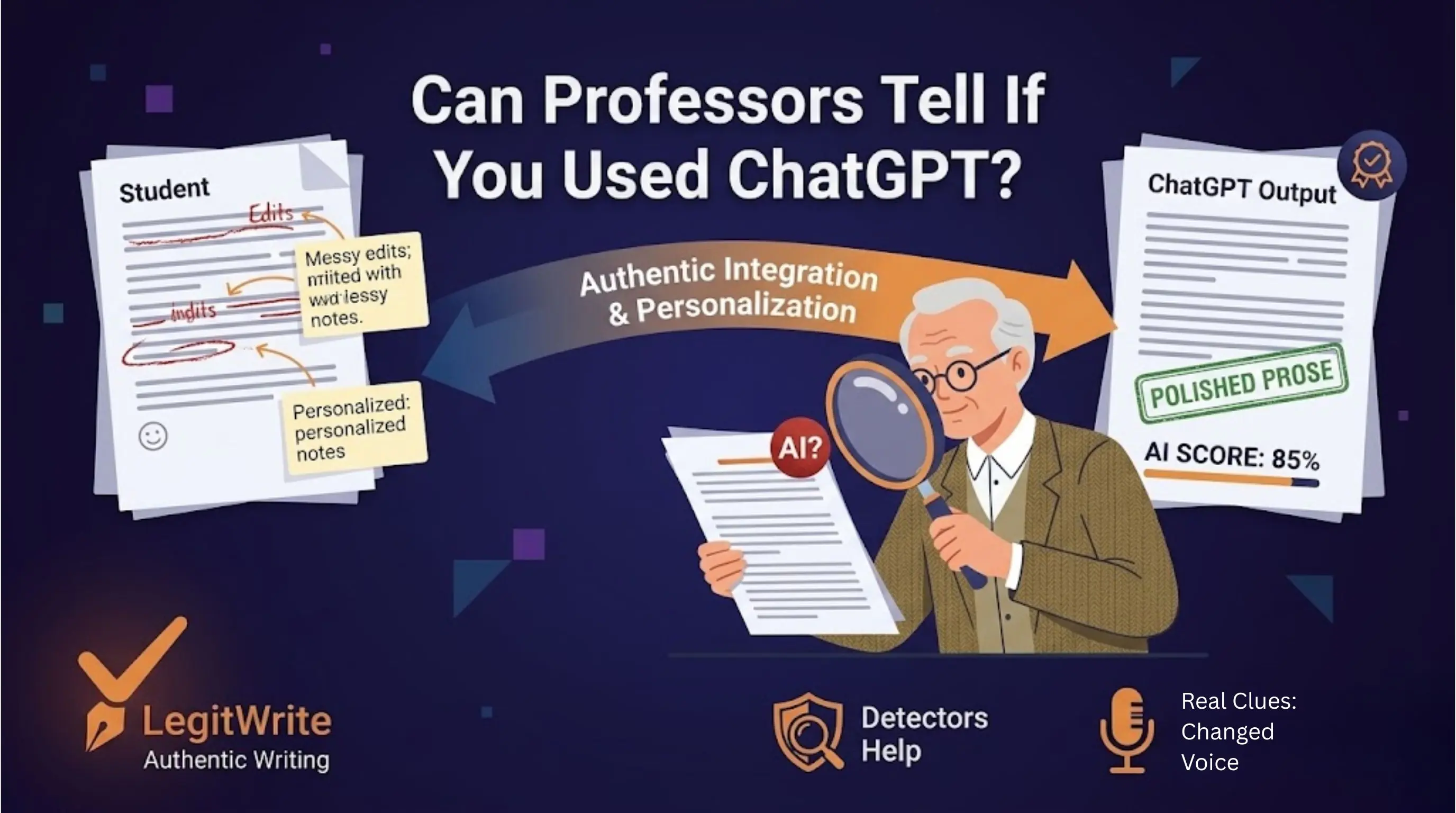
What can raise questions about an AI-assisted draft? Learn the limits of detector scores, how to document your writing, and what to check before submission.
Read story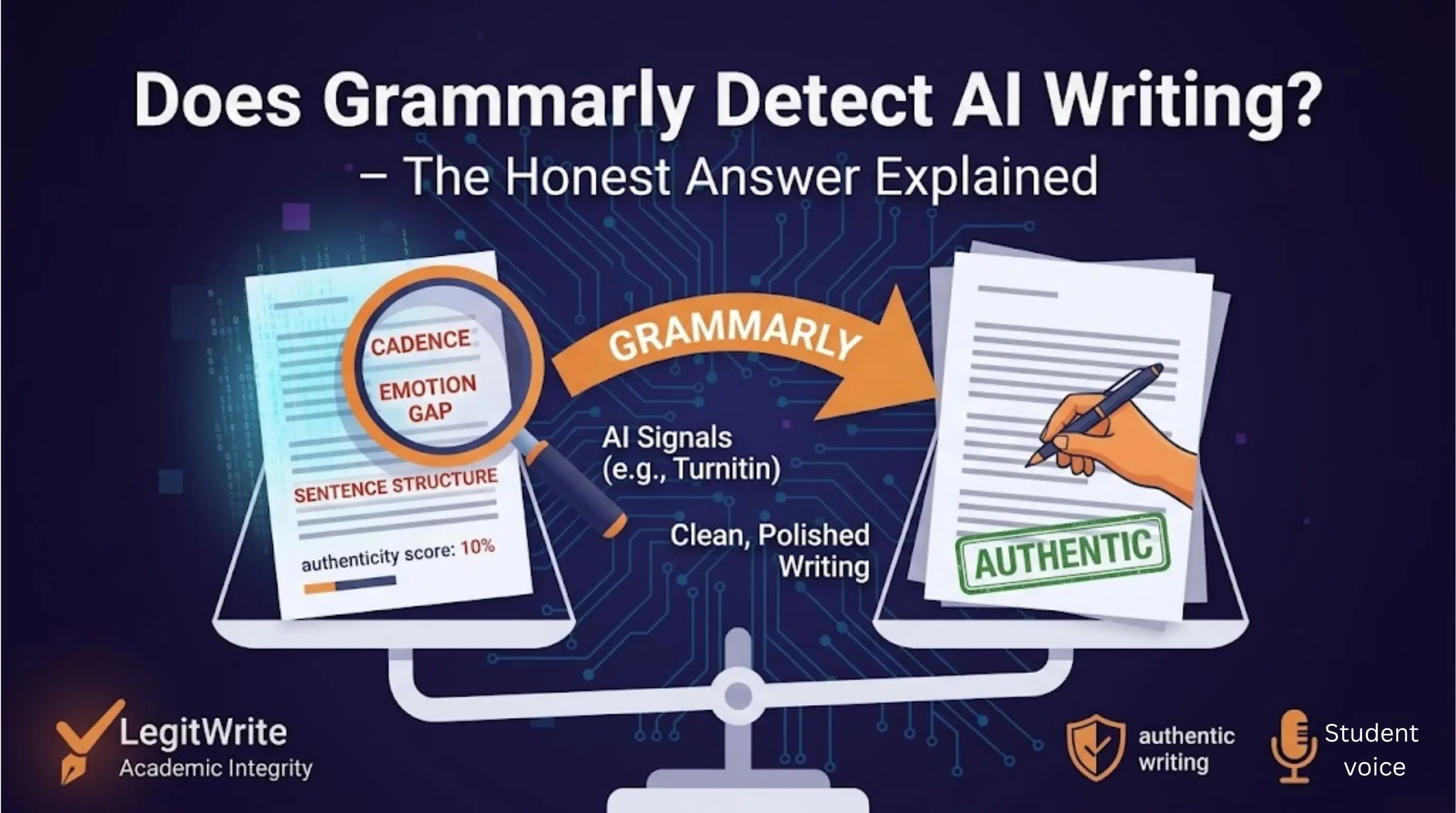
Grammarly now includes AI-related writing features, but many people still wonder whether Grammarly can detect AI writing in a reliable way. This guide explains what Grammarly does, what it does not do, and how it differs from dedicated AI detectors.
Read story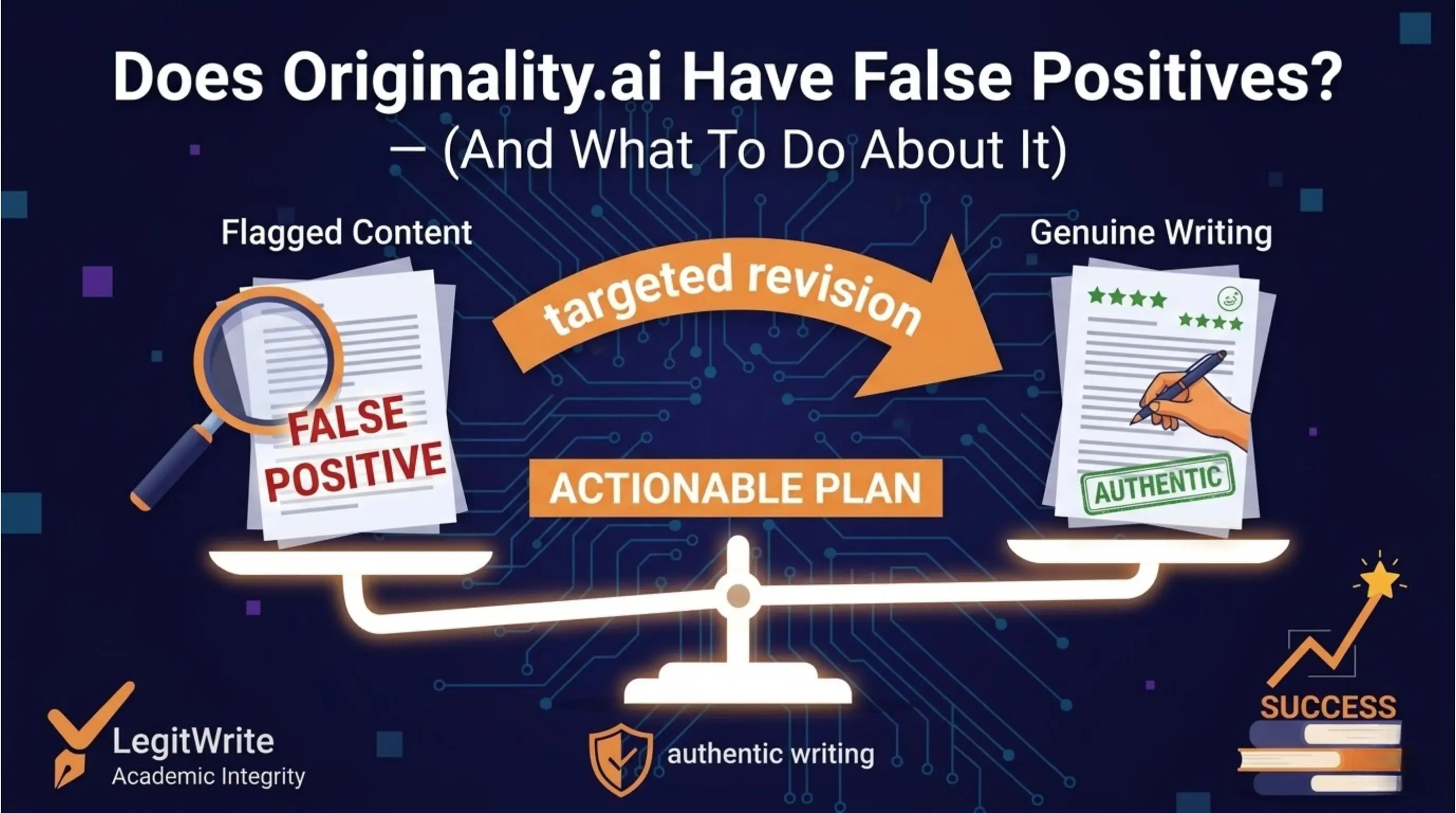
Originality.ai flags some human-written content as AI. Here's why it happens, who's most at risk, and exactly what to do if your genuine writing gets flagged.
Read story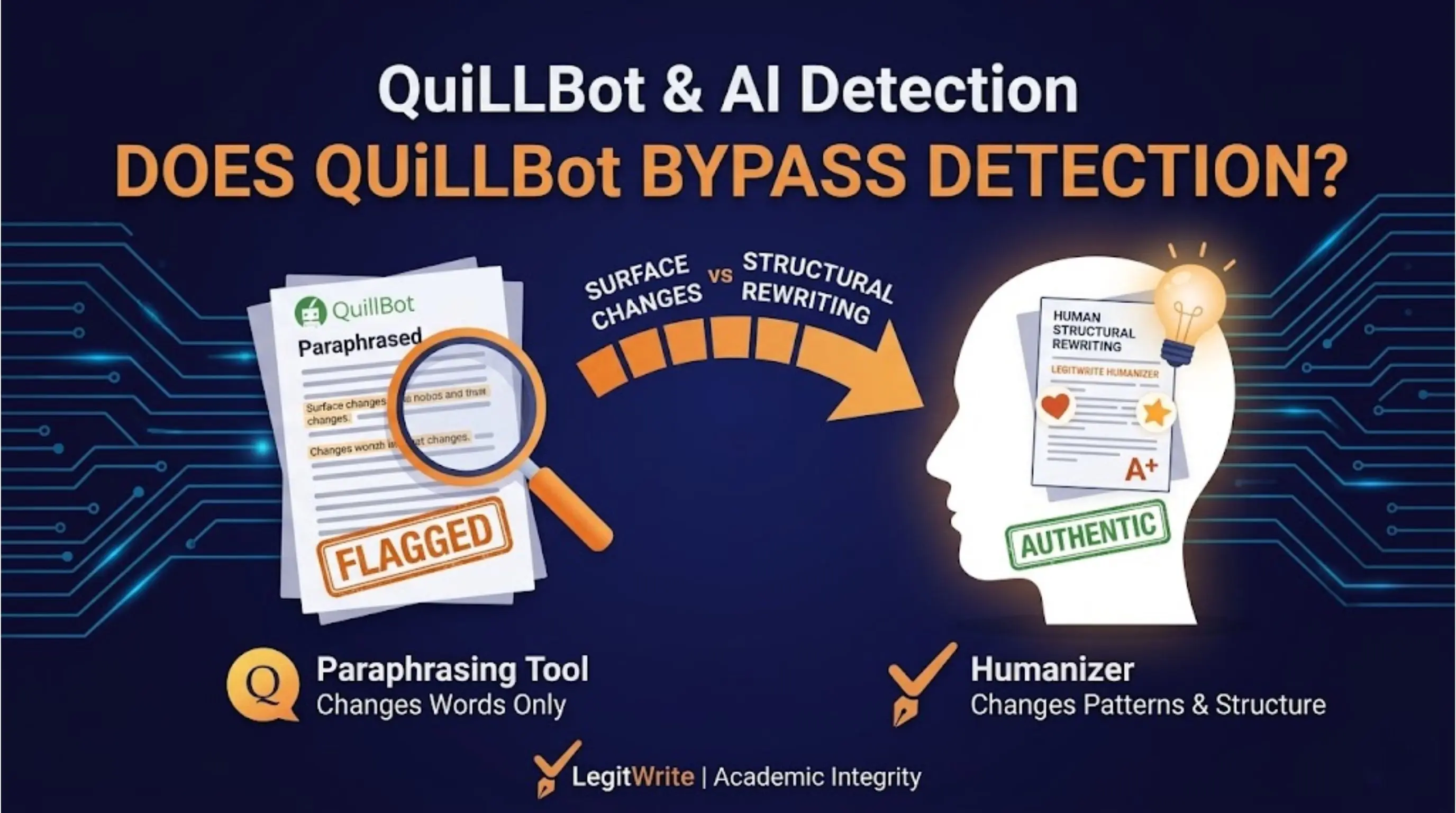
QuillBot can improve phrasing, but bypassing AI detection is a different problem. Here is where QuillBot helps, where it fails, and why structural rewriting matters more.
Read story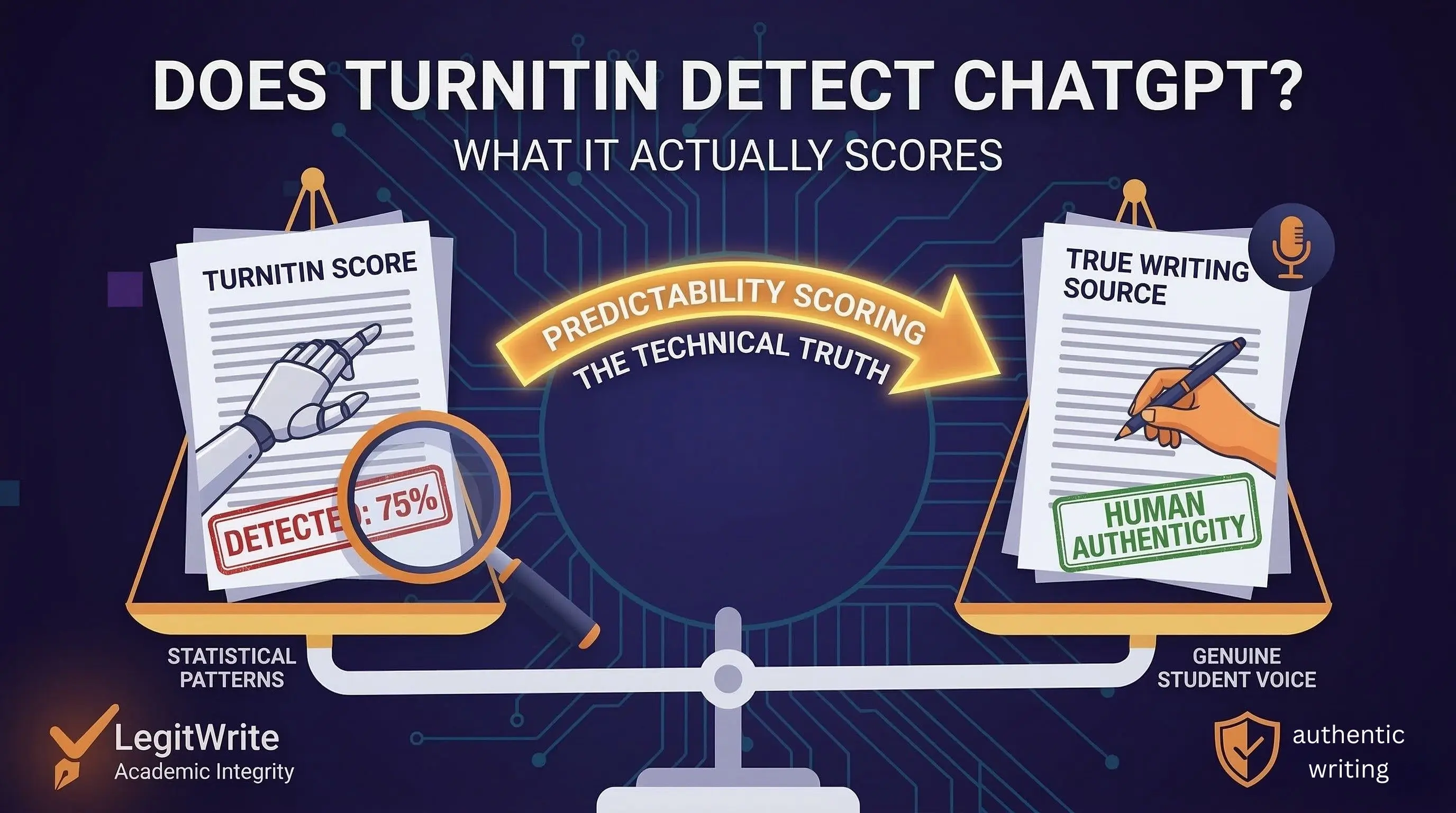
Turnitin's AI detector doesn't read your writing — it reads the math behind it. Here's exactly what it scores, what triggers a flag, and what actually reduces your risk.
Read story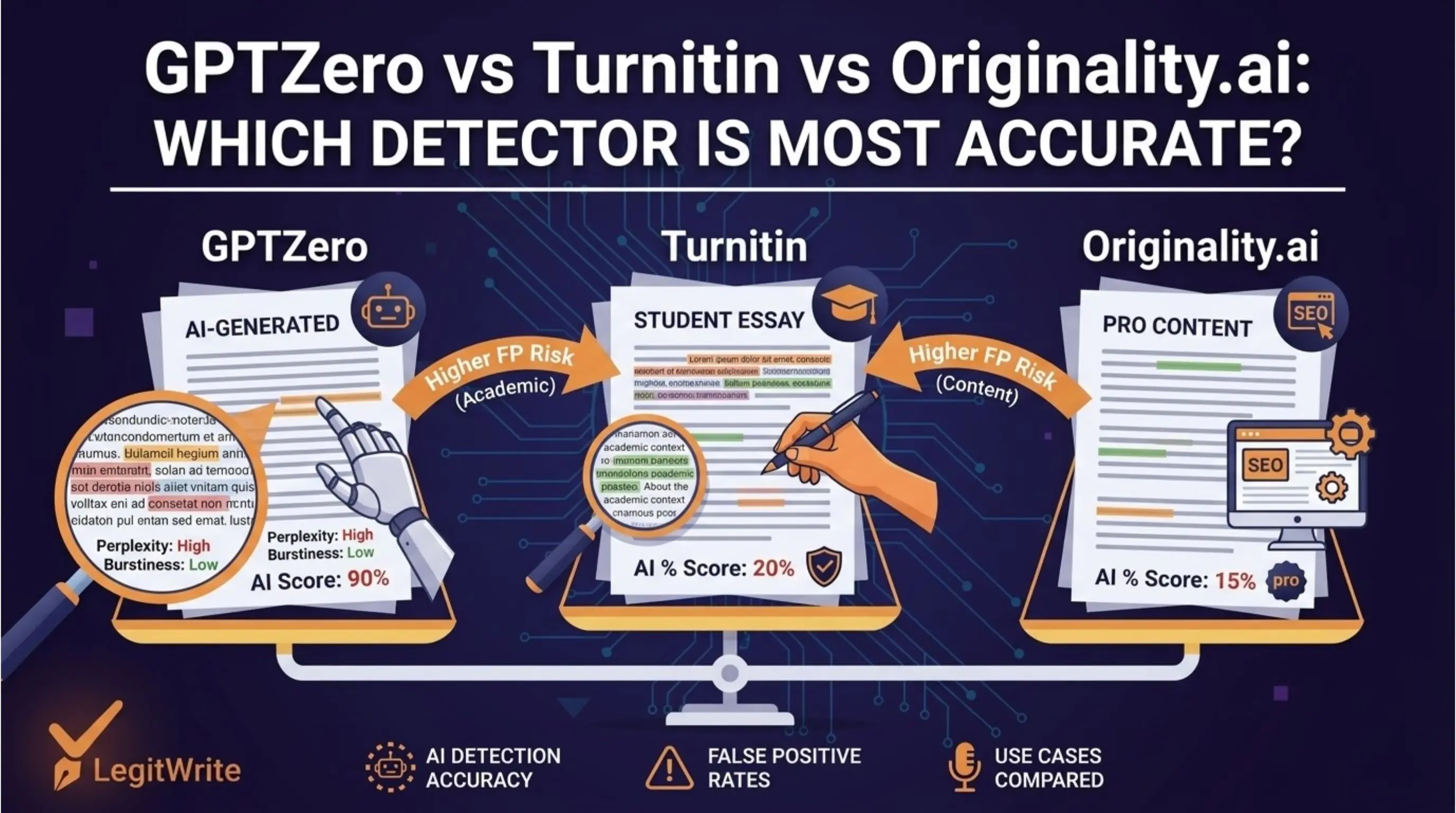
Compare GPTZero, Turnitin, and Originality.ai in 2026: accuracy, false positives, AI score behavior, and which detector is hardest to reduce.
Read story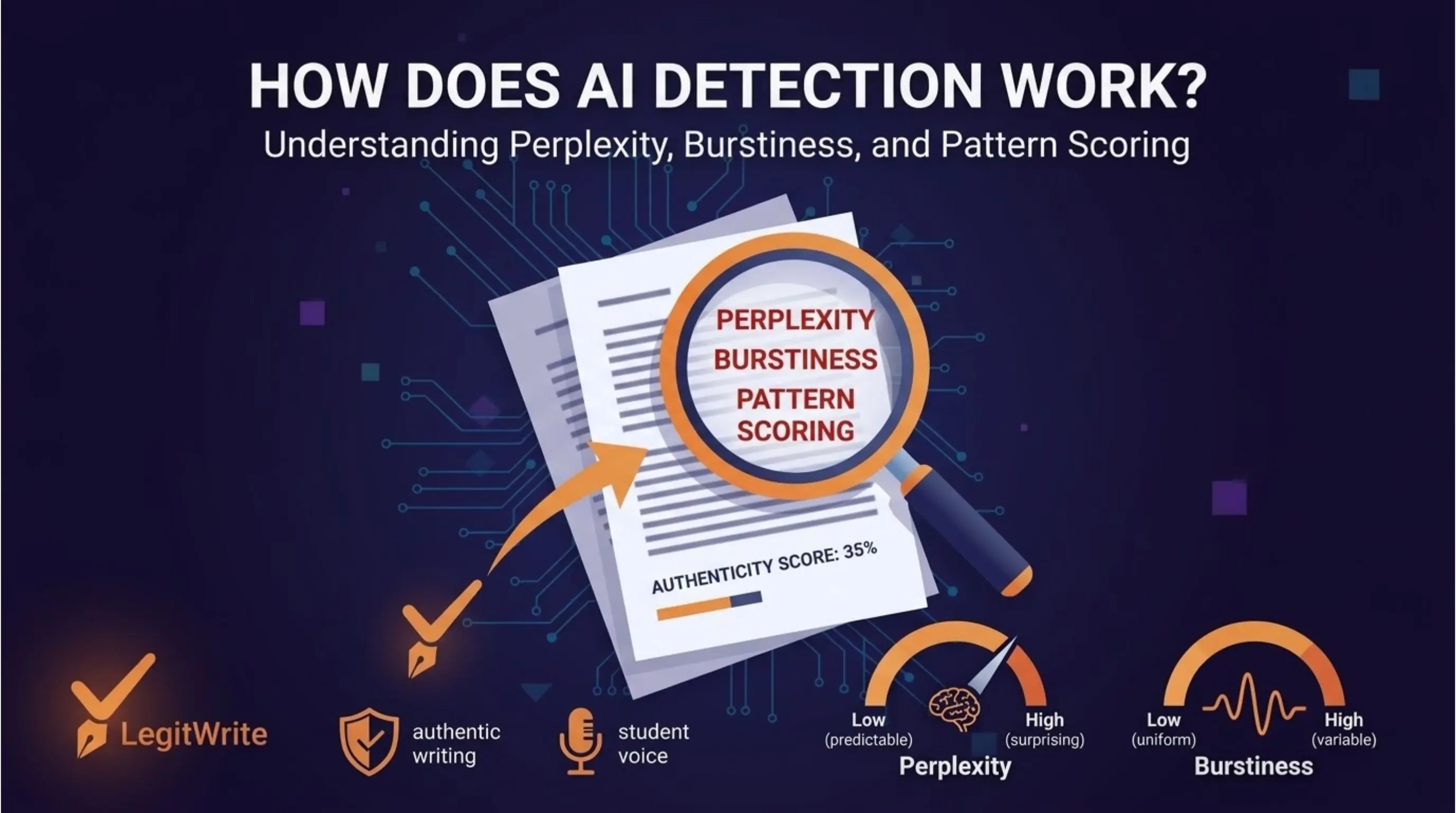
AI detectors don't read your writing — they measure the math behind it. Here's exactly how perplexity, burstiness, and pattern scoring work, explained plainly.
Read story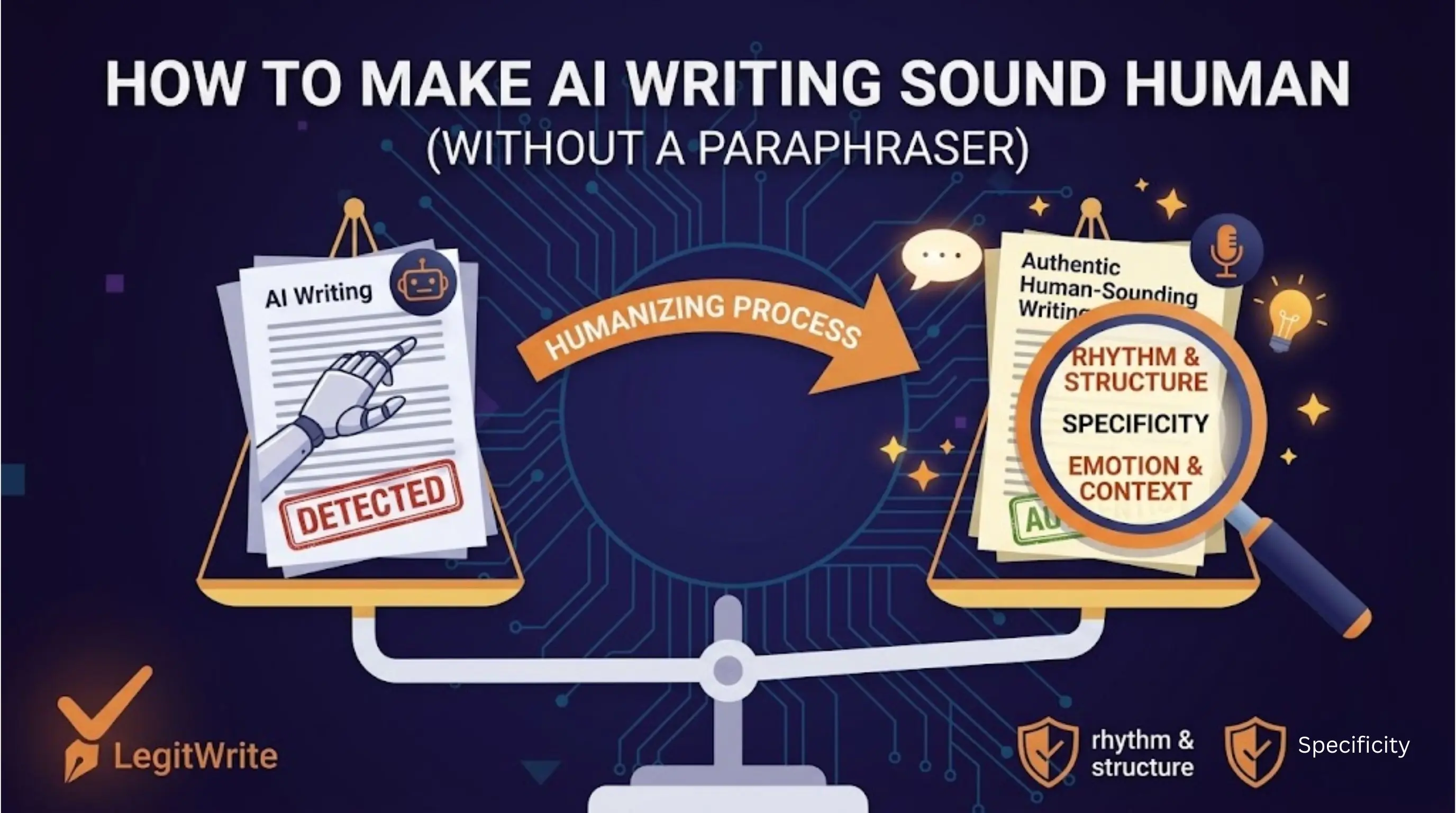
Most paraphrasers only swap words. Human-sounding writing comes from rhythm, structure, and specificity. Here is how to rewrite AI text so it sounds genuinely human.
Read story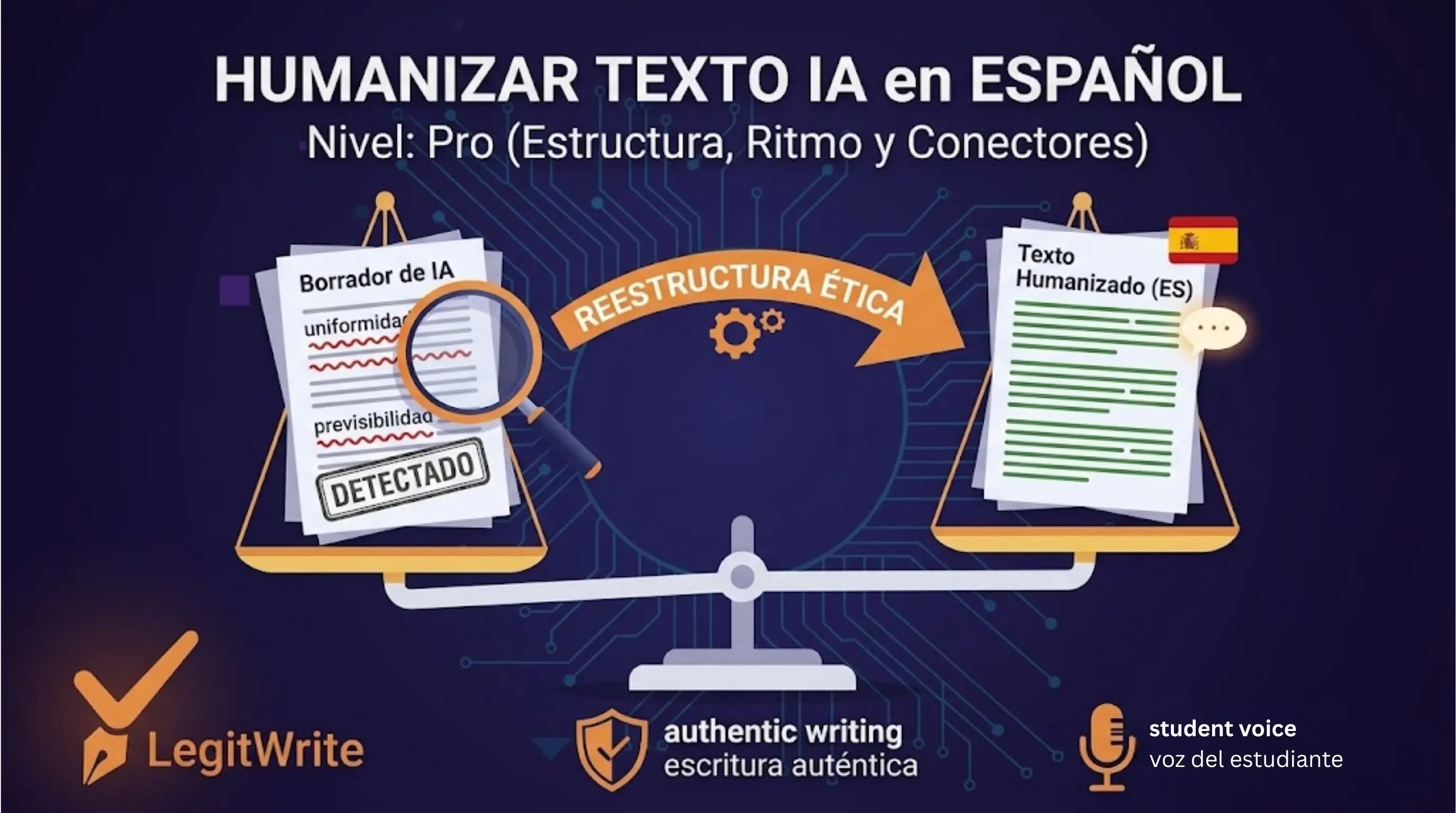
Si quieres que un texto generado por IA en espanol suene natural, no basta con cambiar palabras. Esta guia explica como humanizar la estructura, el ritmo y los conectores para que suene escrito por una persona.
Read story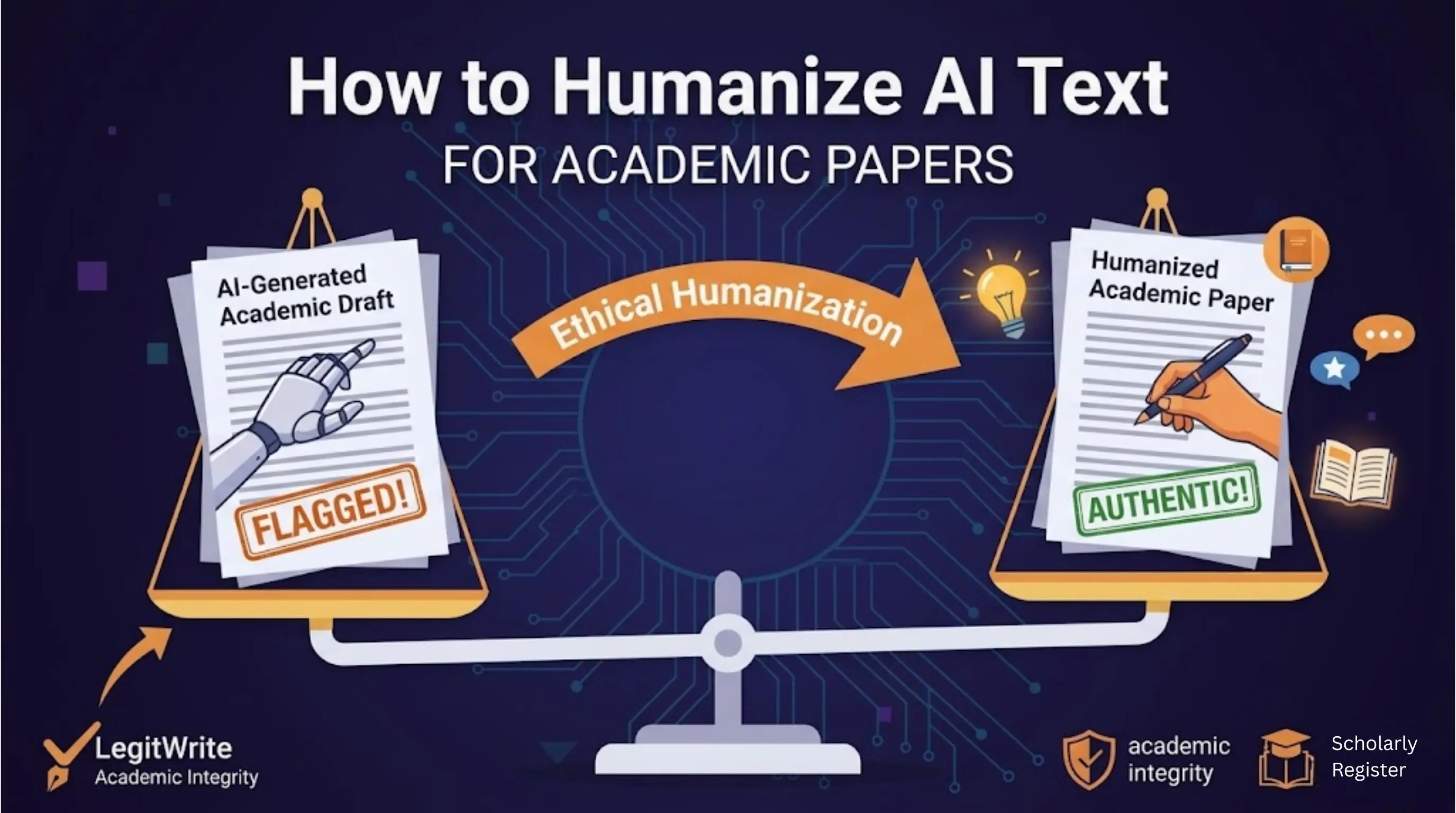
Academic writing has a specific risk profile under AI detectors. Here is how to humanize AI text for essays, research papers, and dissertations without breaking citations or losing academic register.
Read story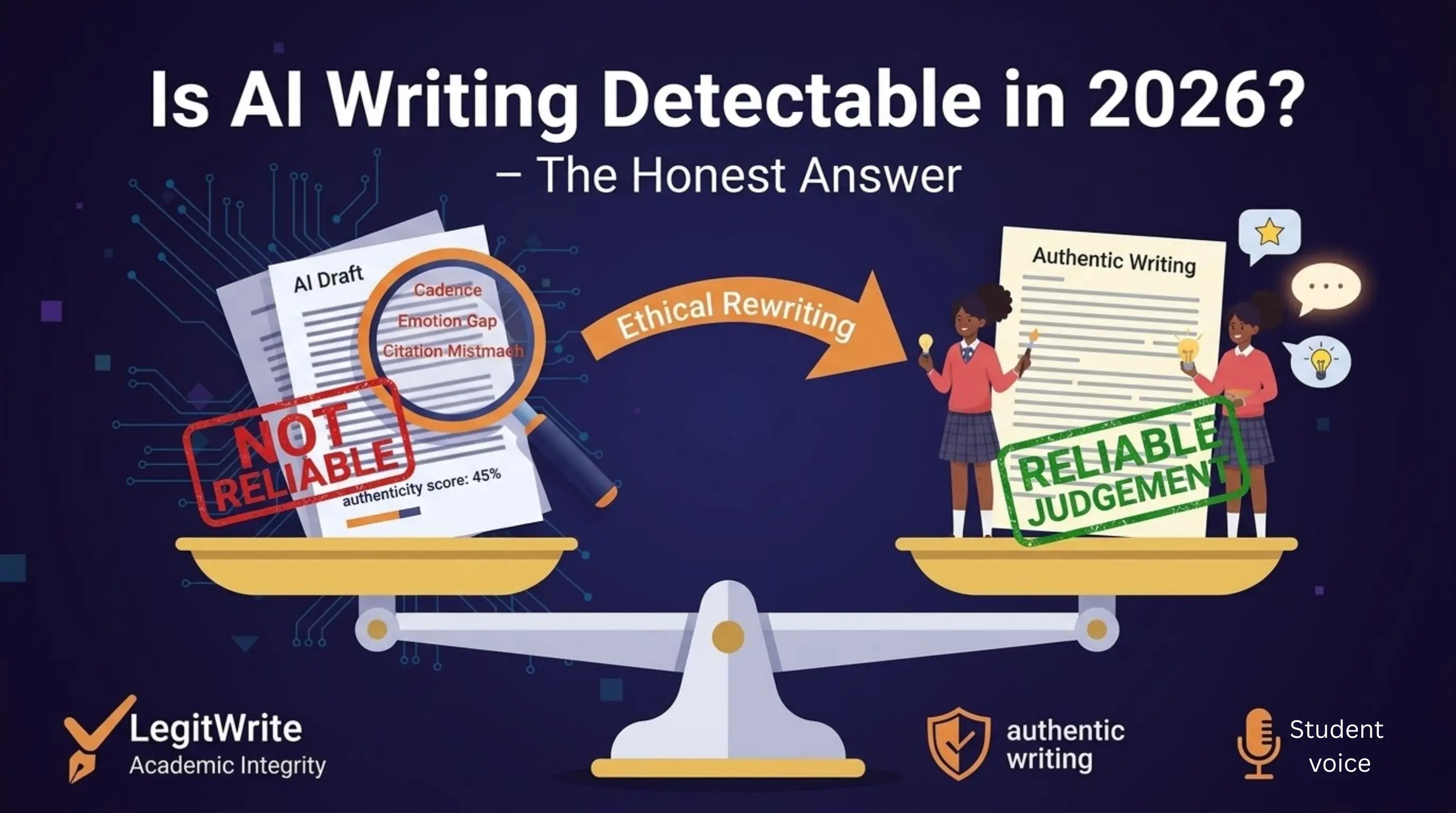
AI detectors have improved significantly in 2026 — but so has AI writing. An honest, research-backed look at how reliable detection actually is, who it fails, and what the accuracy data shows.
Read story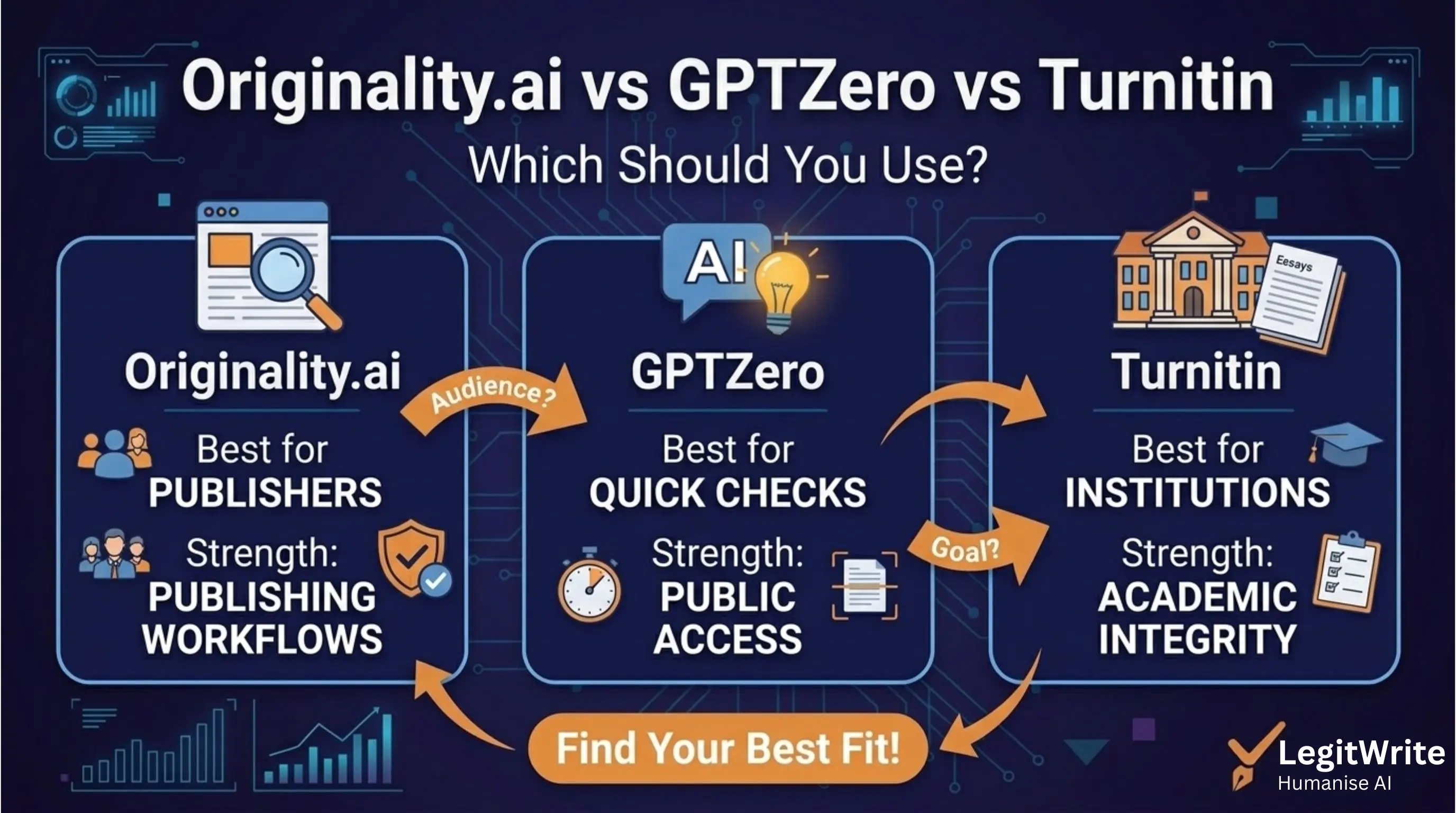
Originality.ai, GPTZero, and Turnitin all detect AI writing, but they serve different environments and score text differently. This guide explains which detector is best for publishers, students, and institutions.
Read story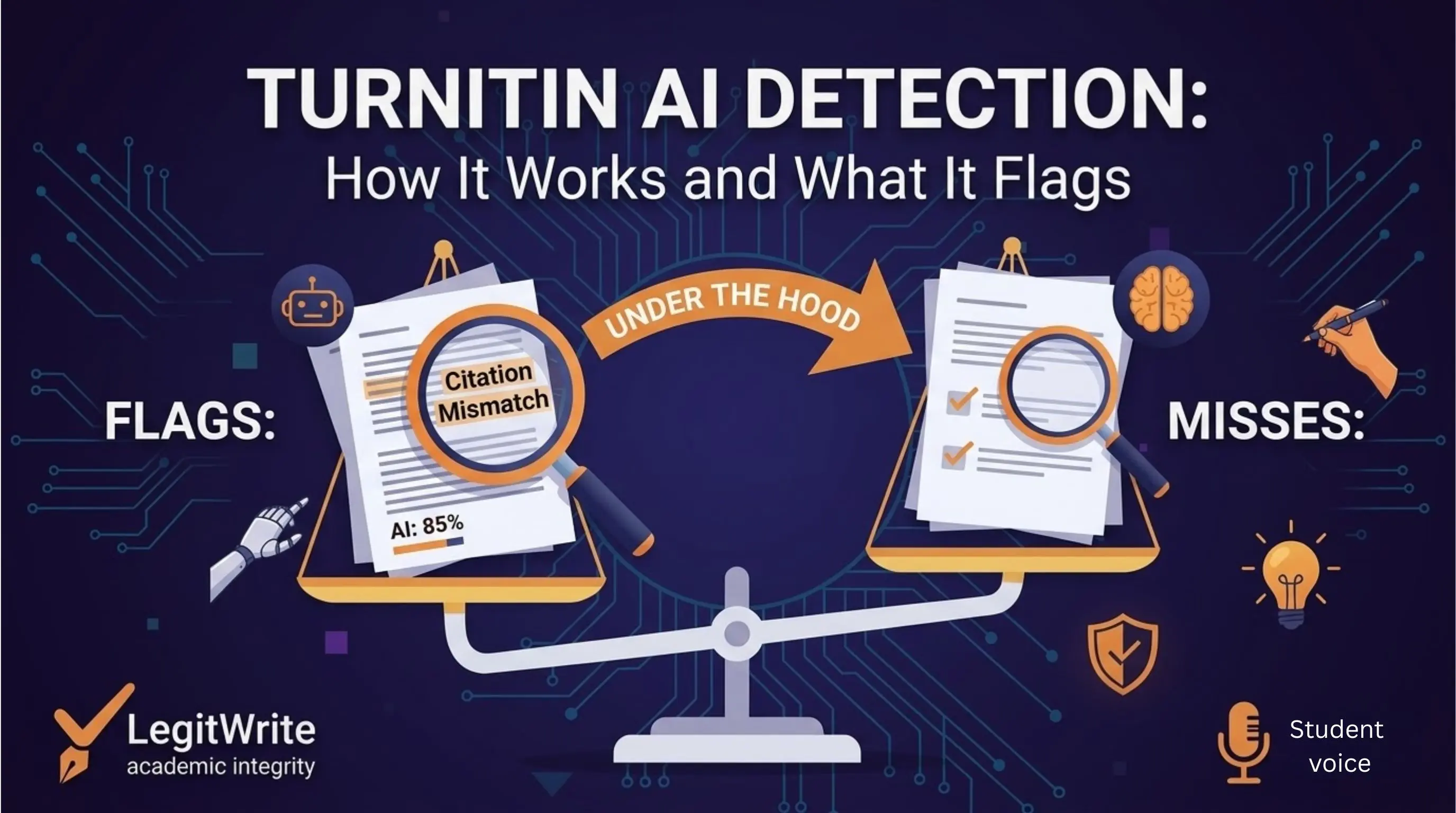
Turnitin's AI detector is now used by thousands of institutions worldwide. Here's exactly how it works, what it flags, and what it misses.
Read story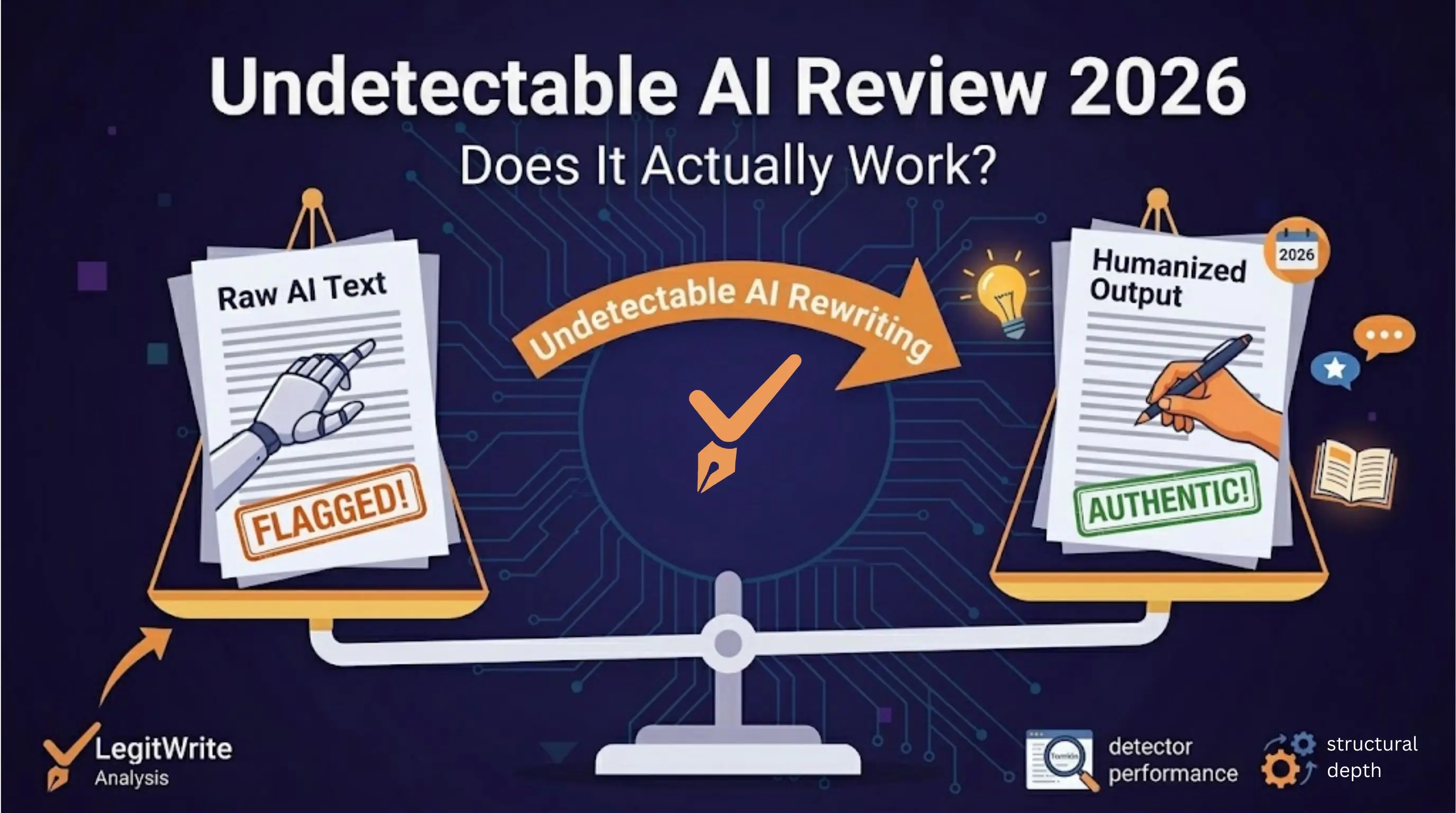
Undetectable AI remains one of the best-known names in the category, but brand awareness is not the same as output quality. Here is a practical 2026 review of what it does well and where it falls short.
Read story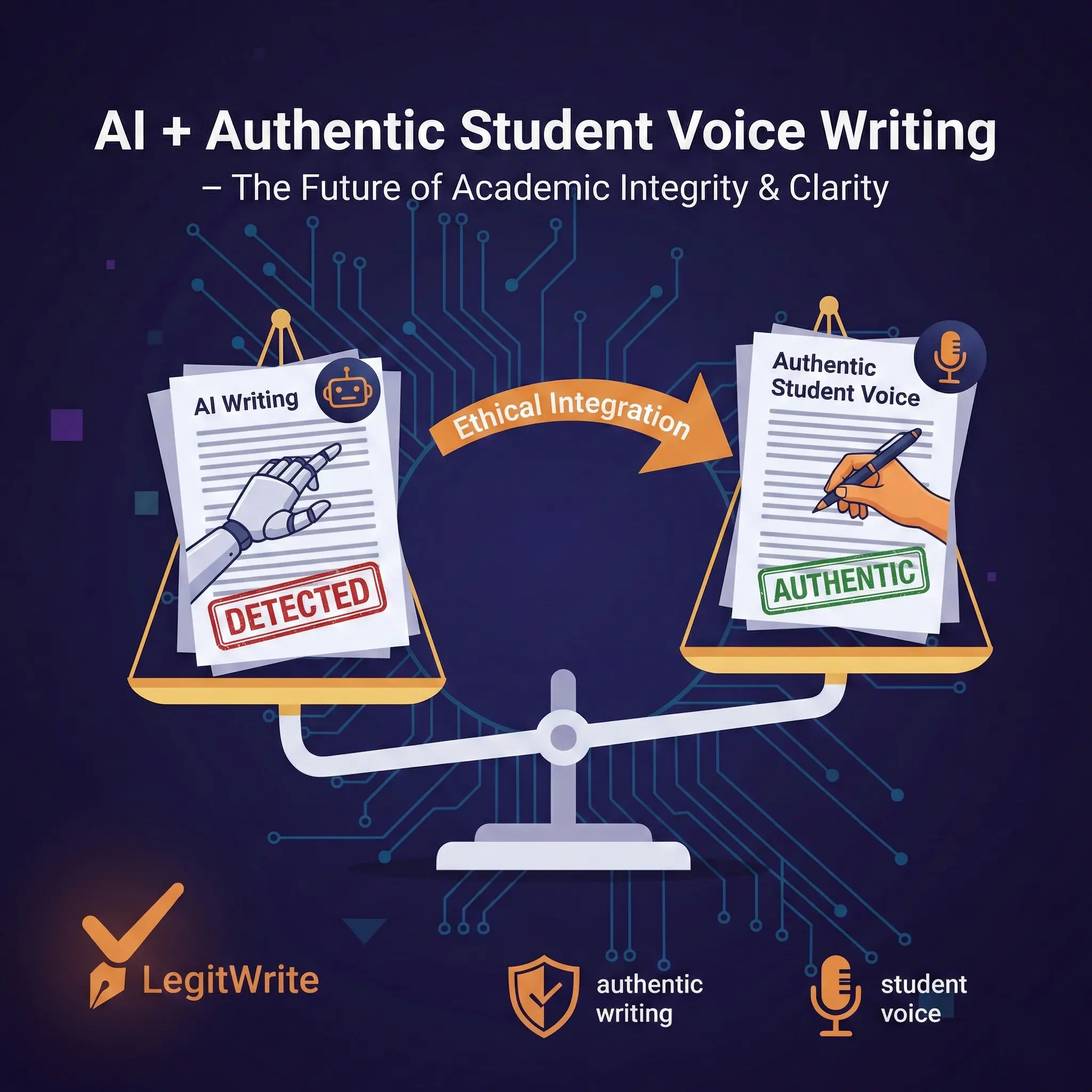
A practical guide for students who use AI without losing their voice. Learn how to keep your perspective, keep your evidence honest, and revise into writing that feels genuinely yours.
Read story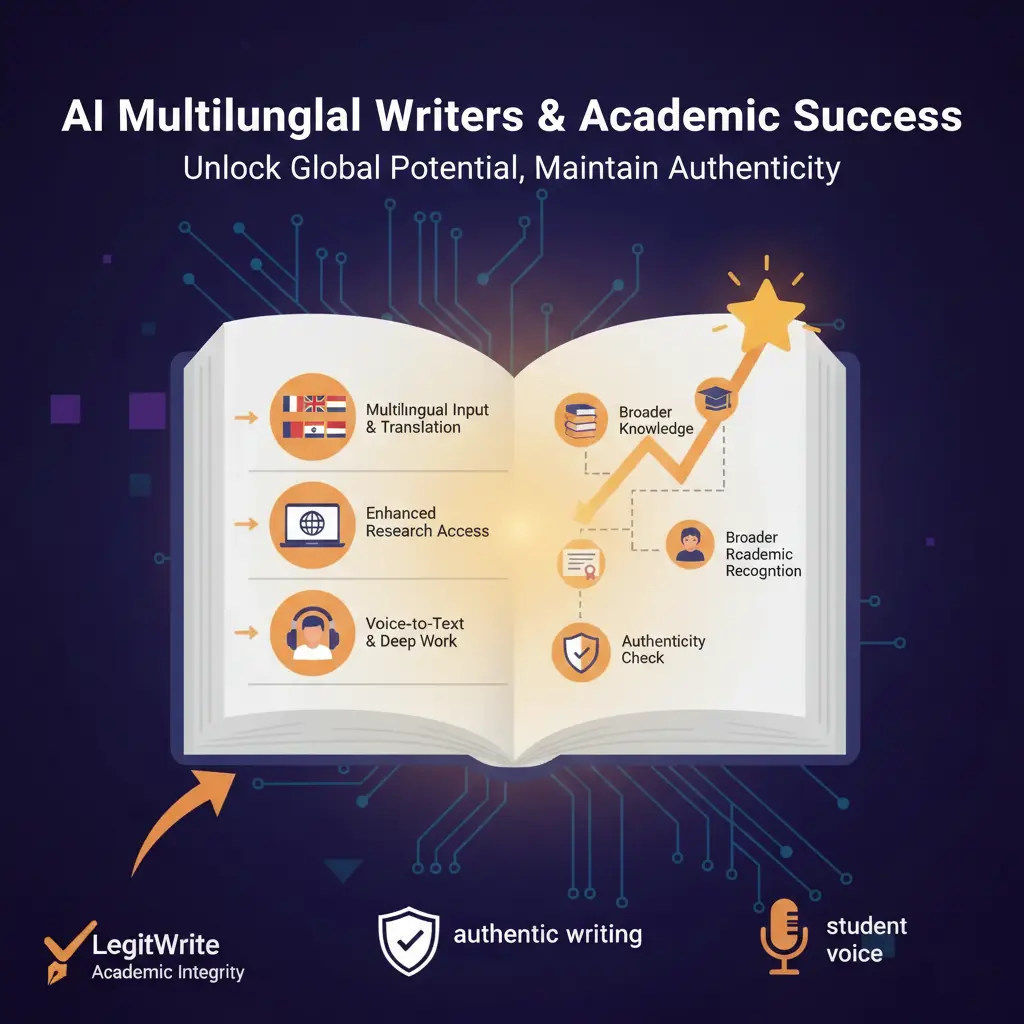
A practical playbook for multilingual students using AI responsibly. Learn how to improve clarity, keep meaning intact, and write academic English that still sounds like you.
Read story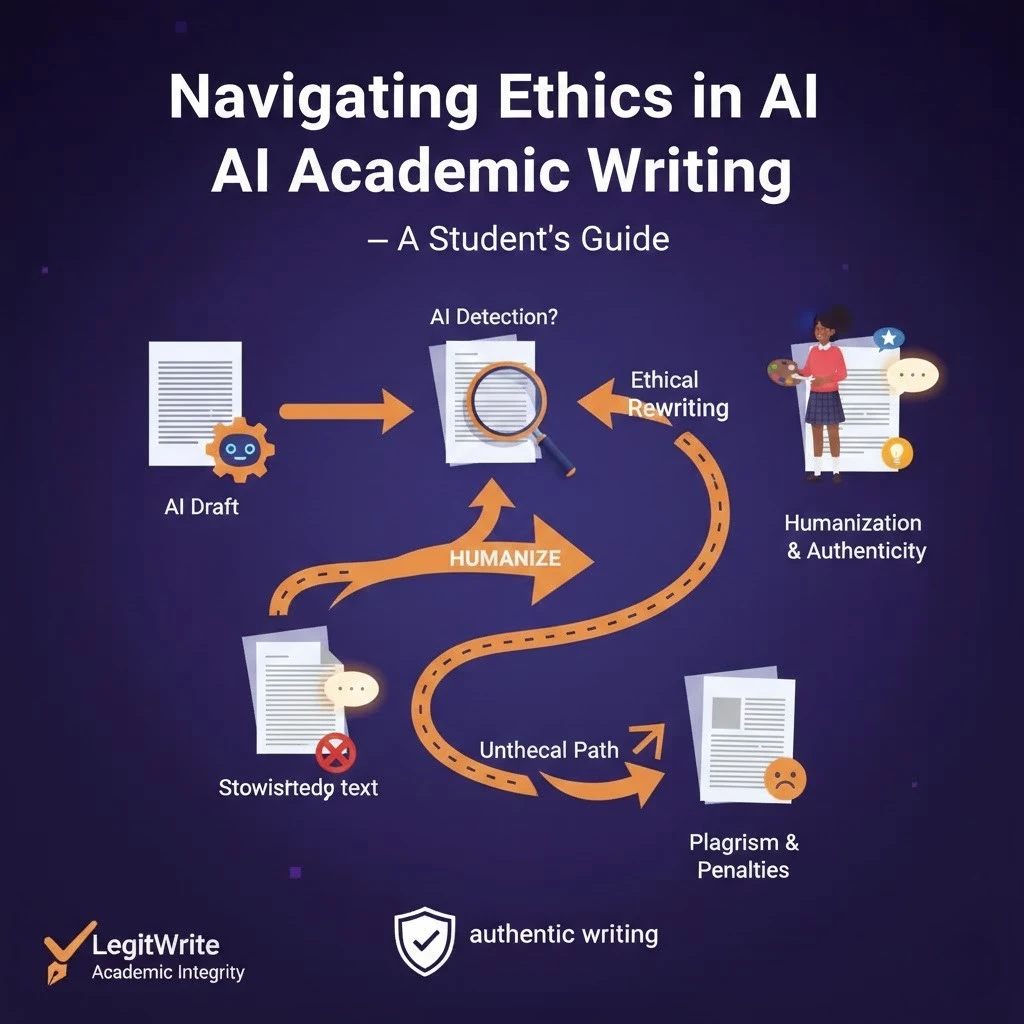
Academic integrity in the AI era is about clarity and accountability. Learn what is usually allowed, what crosses the line, and how to document your process so your work stays honest and defensible.
Read story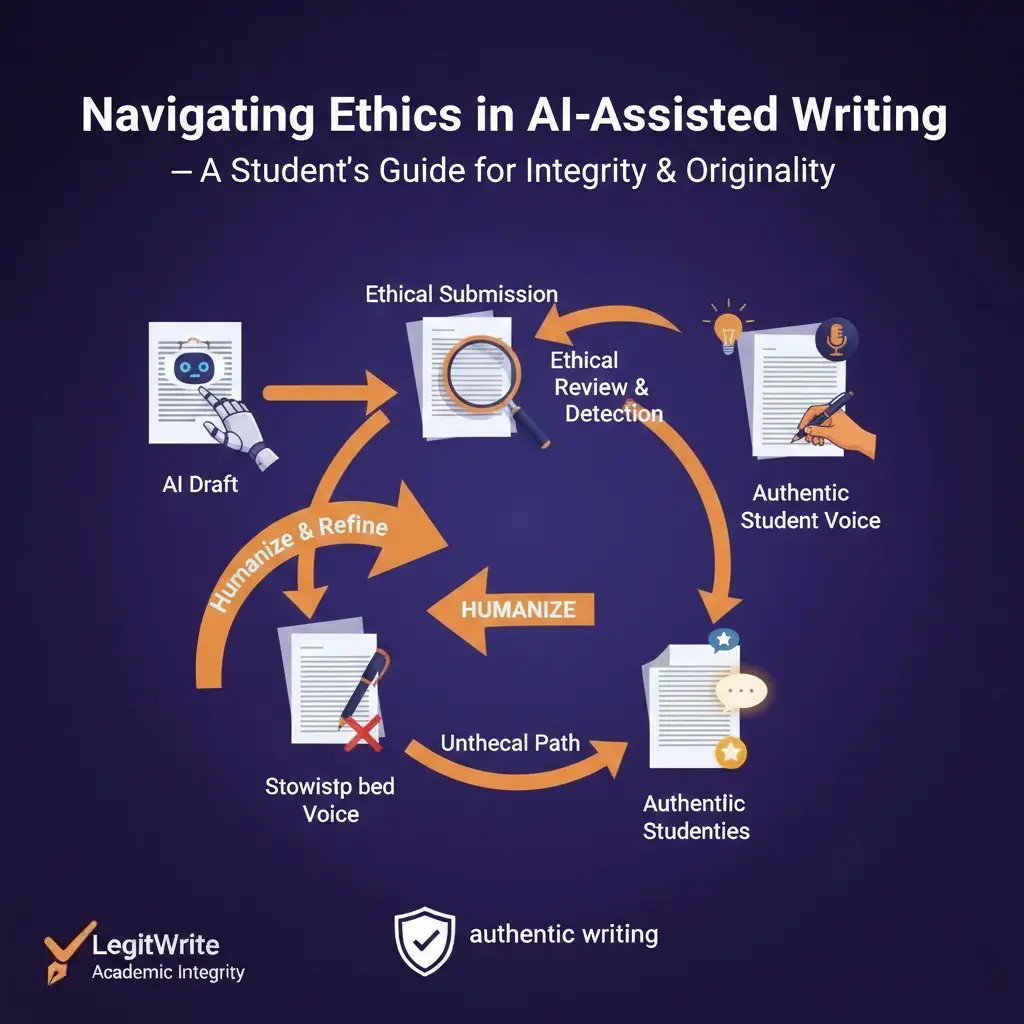
A practical, policy-aware guide to using AI as a writing assistant without crossing integrity lines. Learn what counts as support vs substitution, how to disclose responsibly, and how to keep your sources verifiable.
Read story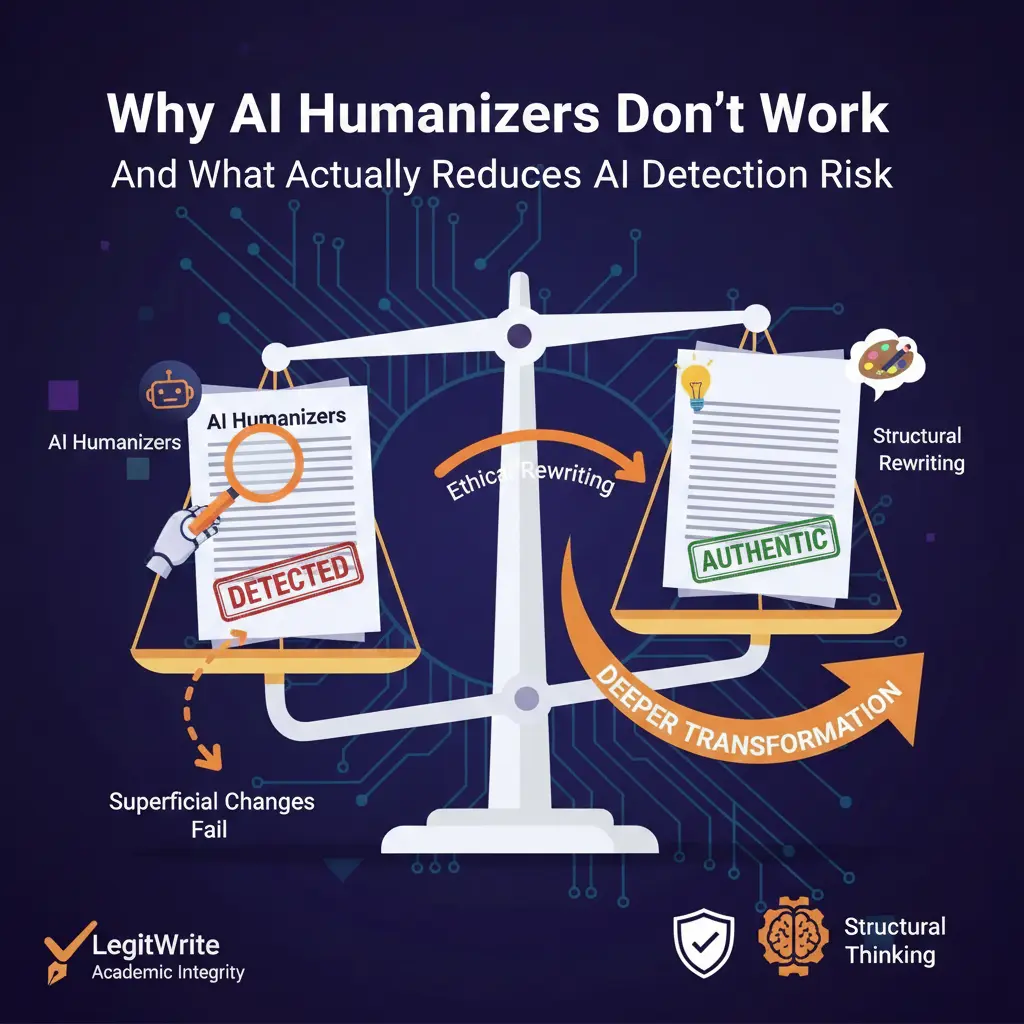
AI humanizers can improve tone, rhythm, and readability, but they cannot prove authorship or guarantee a detector result. Here is how to judge them honestly.
Read story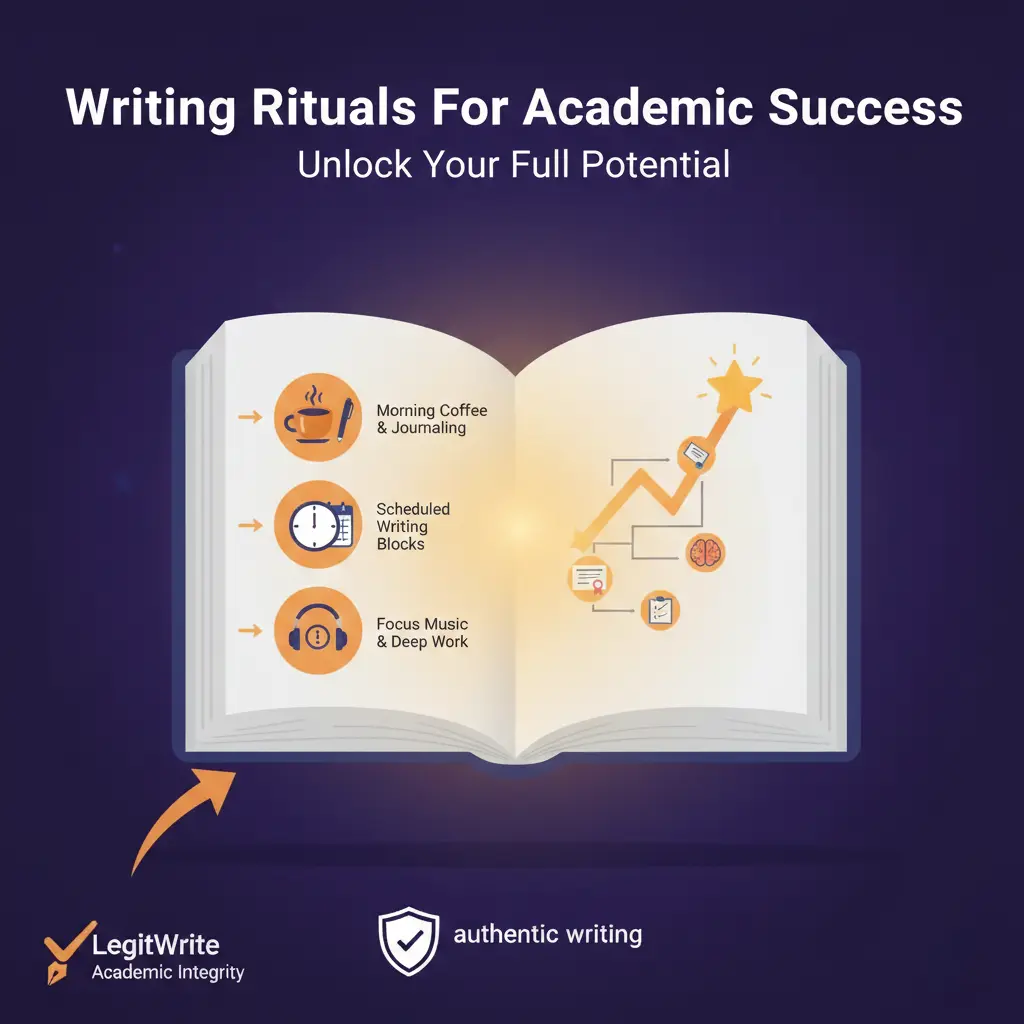
Better grades are often the result of better process. Learn simple writing rituals that reduce procrastination, improve clarity, and make revision feel manageable.
Read story
Learn how LegitWrite bridges the gap between AI detection and humanization to create ethical, authentic, and naturally human writing.
Read story
A deep, practical guide on spotting AI-generated text. Learn how LegitWrite detects algorithmic writing patterns through cadence, topic drift, emotion depth, and citation analysis.
Read story
Learn how to transform robotic AI-generated writing into natural, human-sounding content. Discover how LegitWrite’s AI Humanizer restores tone, rhythm, and emotion while preserving honesty.
Read story
Learn why professors rely on AI detectors and how students can maintain originality and academic honesty using LegitWrite’s detection and humanization tools.
Read story
Understand why truly undetectable AI text doesn’t exist, and how LegitWrite focuses on authenticity, not deception — helping you sound human with honesty and precision.
Read story